Categories
How Semi-Automatic Mattress Packing Improves Efficiency |NAIGU
Learn how semi-automatic mattress packing machines help manufacturers increase packing speed, reduce manual labor, improve consistency, optimize PE film usage, and support growing mattress production.
Aug 27th,2026
62 Views
For mattress manufacturers, packing is an essential stage between production and final delivery. As production volumes increase, relying entirely on manual packing can create bottlenecks, inconsistent packing results, and higher labor requirements. Semi-automatic mattress packing machines provide a practical middle ground by combining machine-assisted operations with operator control.
For small and medium-sized mattress factories, semi-automatic packing can improve efficiency without requiring a fully automated production line.
What Is Semi-Automatic Mattress Packing?
A semi-automatic mattress packing system uses machinery to perform key packing operations while operators remain involved in feeding, positioning, adjustment, or material handling.
Depending on the machine configuration, the process can include:
Mattress Feeding → Compression → Film Packing → Sealing → Rolling or Folding → Finished Mattress
Compared with fully manual packing, the machine handles repetitive and physically demanding operations more efficiently. At the same time, operators can make adjustments according to different mattress sizes and production requirements.
1. Increase Mattress Packing Speed
Manual packing requires workers to repeatedly wrap, compress, seal, and move mattresses. These repetitive processes can take considerable time, especially when daily production increases.
A semi-automatic mattress packing machine can standardize key operations and shorten the packing cycle. This helps manufacturers process more mattresses within the same working period.
For factories where packing has become a production bottleneck, upgrading this stage can improve overall line efficiency.
2. Reduce Manual Labor Requirements
Mattresses are large and relatively heavy products. Repeated lifting and handling can increase the workload for operators.
Semi-automatic equipment reduces the amount of repetitive physical work by assisting with compression and packing operations.
Instead of several workers handling every step manually, operators can focus on:
-
Machine operation
-
Mattress positioning
-
Film preparation
-
Quality inspection
-
Finished product handling
This can help factories use their workforce more efficiently.
3. Improve Packing Consistency
Manual packing results can vary between operators. Film tension, sealing position, compression level, and final package dimensions may not always be consistent.
Semi-automatic machines operate according to adjustable parameters, helping manufacturers achieve more standardized packing results.
Consistent packing is especially important for mattress exporters because uniform packages can make warehouse organization, transportation, and container loading easier.
4. Optimize Packing Film Usage
Packing material is an important operating cost for mattress factories.
A semi-automatic mattress packing machine can control film feeding and sealing more accurately than purely manual operations. With appropriate machine settings and suitable PE film, manufacturers can reduce unnecessary film consumption.
Better material control can contribute to lower packing costs and less material waste.
5. Support Different Mattress Sizes
Many mattress factories produce multiple sizes, including single, double, queen, and king mattresses.
A flexible semi-automatic packing machine can be adjusted for different mattress dimensions and thicknesses. This allows manufacturers to maintain a relatively efficient packing process even when product specifications change.
Before selecting equipment, factories should check the machine's working width, mattress thickness range, and maximum product dimensions.
6. Improve Warehouse and Transportation Efficiency
Compression packing can significantly reduce the volume of suitable mattresses.
Smaller packages can help manufacturers make better use of warehouse space and optimize transportation capacity. For export-oriented mattress factories, this can be particularly valuable because shipping costs are closely related to cargo volume.
Semi-automatic compression packing therefore contributes not only to factory efficiency but also to downstream logistics efficiency.
7. A Practical Solution for Growing Factories
Not every mattress factory needs a fully automatic production line immediately.
For manufacturers that are expanding production but still require operator flexibility, semi-automatic packing equipment can provide a cost-effective upgrade.
It can help factories improve productivity while maintaining human control over product feeding, inspection, and packing adjustments.
This makes semi-automatic packing particularly suitable for:
-
Small and medium-sized mattress factories
-
Growing mattress manufacturers
-
Export-oriented producers
-
Factories with multiple mattress models
-
Manufacturers upgrading from manual packing
Semi-Automatic vs. Manual Mattress Packing
| Feature |
Manual Packing |
Semi-Automatic Packing |
| Packing speed |
Depends heavily on workers |
More consistent |
| Labor requirement |
Higher |
Lower |
| Packing consistency |
Can vary |
More standardized |
| Film control |
Manual |
Machine-assisted |
| Product flexibility |
High |
High with proper adjustment |
| Investment level |
Low |
Moderate |
| Production efficiency |
Suitable for low volume |
Better for growing production |
The best choice depends on production volume, available labor, mattress specifications, and future expansion plans.
How to Select a Semi-Automatic Mattress Packing Machine
When evaluating equipment, mattress manufacturers should consider several factors.
Mattress Specifications
Confirm the machine's compatible mattress width, length, thickness, and construction.
Production Capacity
Calculate the required packing output based on daily production and working hours.
Compression Requirements
Different mattress materials have different compression characteristics. The machine should provide suitable compression performance for the products being packed.
Packing Film
Choose PE film with appropriate strength, thickness, flexibility, and sealing performance for the machine and mattress.
Factory Layout
Consider the available space and how the machine will connect with existing production and material-handling processes.
Future Expansion
If production is expected to increase, choosing equipment that can support higher output or future automation can provide greater long-term value.
Conclusion
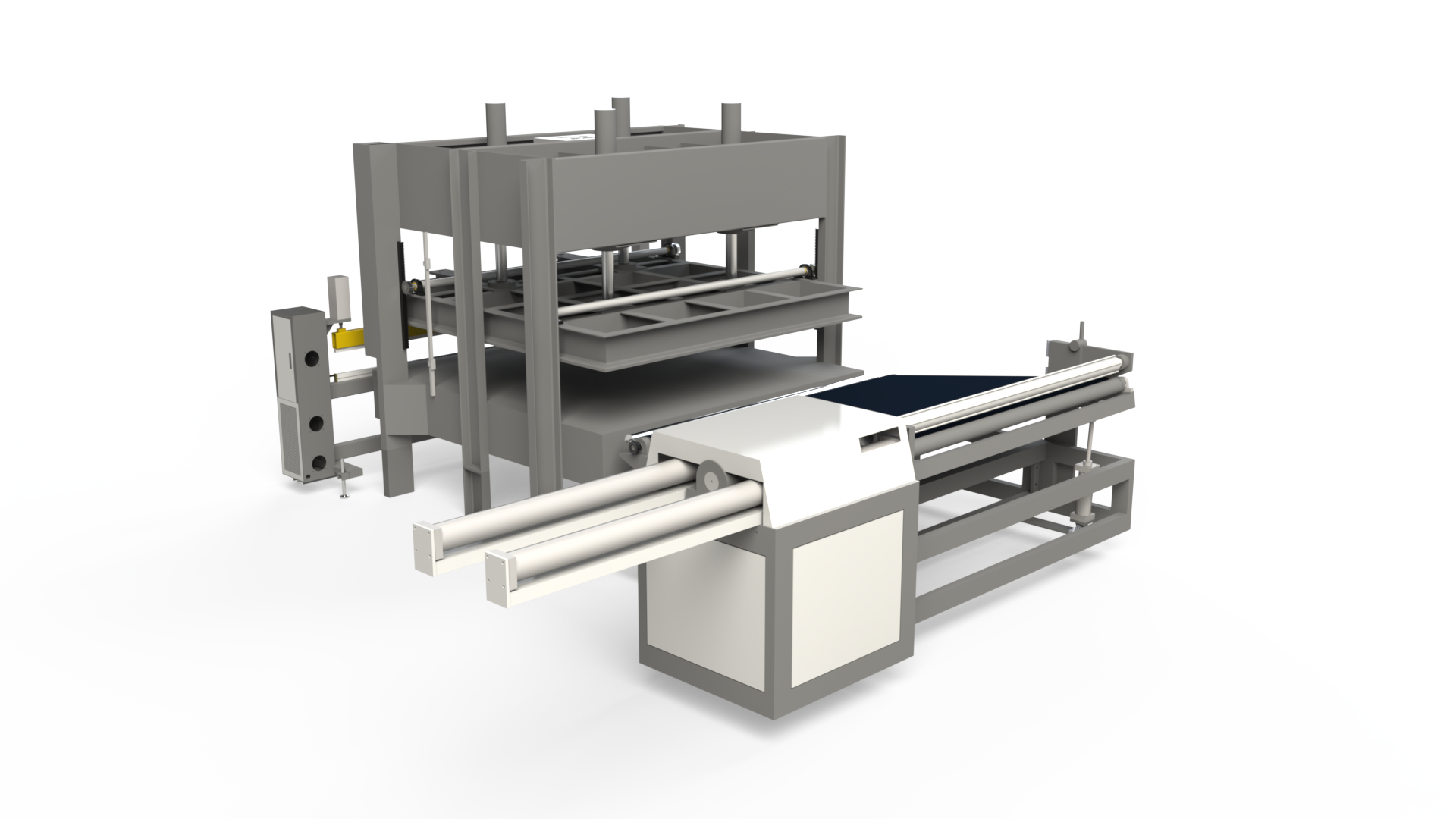
Semi-automatic mattress packing provides an efficient transition from manual operations to automated production. By improving packing speed, reducing repetitive labor, standardizing packing quality, and optimizing film usage, it can help mattress factories increase productivity without immediately investing in a fully automated line.
For small and medium-sized manufacturers, especially those serving export and e-commerce markets, a semi-automatic mattress packing machine can be a practical solution for improving both production and logistics efficiency.


