Categories
What Affects the Operating Cost of a Sofa Compression Roll Packing Machine? |NAIGU
Learn what affects sofa compression roll packing machine operating costs, including labor, electricity, packing film, maintenance, downtime, and production efficiency.
Oct 14th,2026
10 Views
What Affects the Operating Cost of a Sofa Compression Roll Packing Machine?
A sofa compression roll packing machine can help furniture manufacturers improve packing efficiency, reduce manual handling, and optimize storage and transportation. However, the purchase price is only one part of the total investment. Daily operating expenses also influence the long-term cost-effectiveness of the equipment.
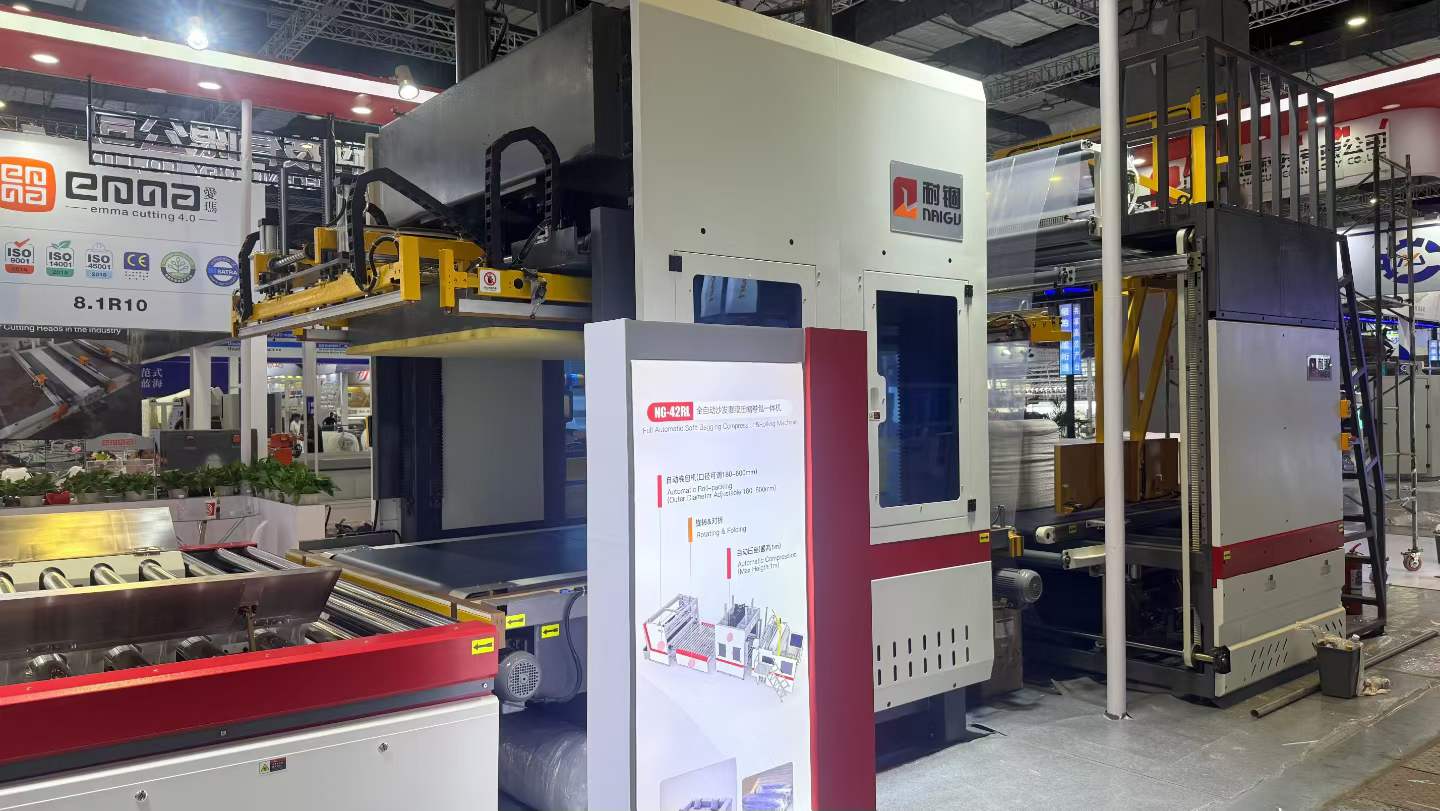
For sofa manufacturers, understanding these cost factors makes it easier to compare machine configurations, control production expenses, and plan future investments.
1. Labor Requirements and Automation Level
Labor is an important part of the operating cost of a sofa compression roll packing machine. The number of operators required depends on the machine's automation level, feeding method, product handling process, and factory workflow.
A semi-automatic system may require more manual loading, positioning, and unloading. A fully automatic sofa compression roll packing line can automate more stages of the packing process, depending on its configuration.
To evaluate labor costs, manufacturers should compare the staffing requirements of their existing process with those of the proposed machine.
Annual labor cost = Number of operators × Average annual labor cost per operator
When evaluating automation, consider the complete workflow rather than the packing machine alone. Loading, inspection, material replacement, and finished-product handling may still require operator involvement.
2. Electricity Consumption
Electricity consumption depends on the machine's installed power, actual operating load, daily working hours, and production schedule.
Sofa compression roll packing equipment may use motors, hydraulic systems, control systems, and other components, depending on the machine design. Different configurations can therefore have different energy requirements.
Before purchasing, ask the supplier for the machine's electrical specifications and expected energy consumption under relevant operating conditions.
A simple estimate is:
Daily electricity cost = Average power consumption (kW) × Operating hours × Electricity price per kWh
Use measured or supplier-confirmed average consumption when possible. The machine's rated power alone does not necessarily represent its average electricity usage during production.
3. Packing Film Consumption
Packing film is an ongoing cost that can significantly affect the cost per packed sofa. Actual consumption depends on sofa dimensions, package design, film width and thickness, compression requirements, and the number of wrapping layers.
Using film that does not match the machine or the sofa's packing requirements can lead to unnecessary waste, poor sealing, or damaged packages.
To manage film costs, manufacturers should:
-
Select film specifications suitable for the machine and sofa construction.
-
Standardize wrapping and sealing settings.
-
Monitor film consumption for different sofa models.
-
Track film waste during setup and roll changes.
-
Test film performance before making large-scale changes.
The goal is to optimize film usage without compromising package strength or product protection.
4. Maintenance and Replacement Parts
Regular maintenance helps maintain stable machine performance and reduce unexpected production interruptions. Maintenance costs vary according to machine design, working conditions, operating hours, and the quality of routine servicing.
Potential expenses include lubrication, inspection, replacement of worn components, hydraulic system servicing where applicable, and technical support.
Manufacturers can control these costs by following the supplier's maintenance schedule, training operators, keeping essential spare parts available, and identifying minor problems before they cause extended downtime.
When comparing suppliers, ask which spare parts are consumable items, how often they may require replacement, and what technical support is available.
5. Production Downtime and Operating Efficiency
A machine's operating cost is affected not only by the resources it consumes but also by how consistently it runs.
Downtime may result from equipment faults, film shortages, incorrect settings, product changes, or delays in upstream sofa production.
To reduce avoidable interruptions, manufacturers should prepare packing materials in advance, standardize machine settings, train operators, and coordinate production schedules with the packing area.
It is also useful to record downtime by cause. This helps managers distinguish between equipment-related problems and workflow issues that require different solutions.
6. Sofa Compatibility and Product Changeovers
Different sofa models may require different compression settings, film specifications, and rolling parameters. Frequent changes between product types can increase setup time and reduce effective production hours.
Before choosing a sofa compression roll packing machine, manufacturers should confirm the range of sofa constructions, dimensions, and weights that the equipment can handle.
Where factories produce many sofa models, buyers should ask how machine adjustments are performed and how long typical changeovers take.
Testing representative products can help determine whether the proposed configuration meets production requirements without excessive setup time or compromising product quality.
7. Equipment Utilization and Production Volume
The number of sofas packed per shift affects how operating costs are distributed across individual products.
When a machine runs consistently at a suitable production level, fixed costs such as equipment depreciation can be spread across more units. However, a machine that is too large for actual demand may create unnecessary investment and operating expenses.
Manufacturers should evaluate expected daily output, seasonal demand, order patterns, and realistic production targets before selecting a machine.
A suitable configuration should match current requirements while allowing reasonable flexibility for future growth.
8. Factory Layout and Material Handling
The layout around a sofa compression roll packing machine can influence labor requirements, handling time, and production continuity.
Insufficient space or poorly planned transfer routes may cause finished sofas to accumulate before packing or create unnecessary movement between workstations.
A well-planned packing area should provide sufficient space for product feeding, machine operation, film storage, maintenance access, and finished-package handling.
For larger operations, conveyors or integrated packing lines may help coordinate product movement. Their additional purchase, energy, and maintenance costs should be included in the overall evaluation.
9. How to Calculate the Operating Cost per Sofa
To understand the actual cost of running a sofa compression roll packing machine, manufacturers can calculate the operating cost per packed unit.
A practical formula is:
Operating cost per sofa = Total operating costs ÷ Number of sofas packed
Include relevant expenses such as:
-
Labor
-
Electricity
-
Packing film and material waste
-
Maintenance and spare parts
-
Other recurring operating expenses
For a broader investment analysis, also consider equipment depreciation, installation costs, and financing expenses where applicable. Keep one-time investment costs separate from recurring operating costs to avoid double-counting.
Manufacturers should compare costs over the same period and use actual production data whenever possible.
10. Practical Ways to Control Operating Costs
Several improvements can help sofa manufacturers manage packing expenses over time:
-
Choose suitable equipment: Match the machine's capacity and functions to actual sofa specifications and production demand.
-
Optimize film usage: Test appropriate film materials and standardize wrapping parameters.
-
Train operators: Improve setup consistency and reduce avoidable operating errors.
-
Schedule preventive maintenance: Follow the recommended service plan and inspect critical components regularly.
-
Monitor performance: Track electricity, film consumption, downtime, and output per shift.
-
Improve workflow: Coordinate sofa production, inspection, material preparation, and final packing.
Consistent monitoring helps manufacturers identify where costs arise and which changes deliver measurable improvements.
Choose a Suitable Sofa Compression Roll Packing Solution
The operating cost of a sofa compression roll packing machine depends on labor requirements, electricity consumption, packing film, maintenance, downtime, product changeovers, and machine utilization.
The lowest purchase price does not always mean the lowest long-term cost. Manufacturers should evaluate total operating expenses alongside packing quality, production capacity, equipment reliability, and potential logistics benefits.
NAIGU Mattress Machinery provides sofa compression and roll packing equipment for furniture manufacturers with different production requirements. By reviewing your sofa specifications, expected output, packing materials, and factory layout, you can identify a suitable machine configuration for your business.
Contact NAIGU to discuss your sofa packing requirements and request a suitable solution for your factory.


