Categories
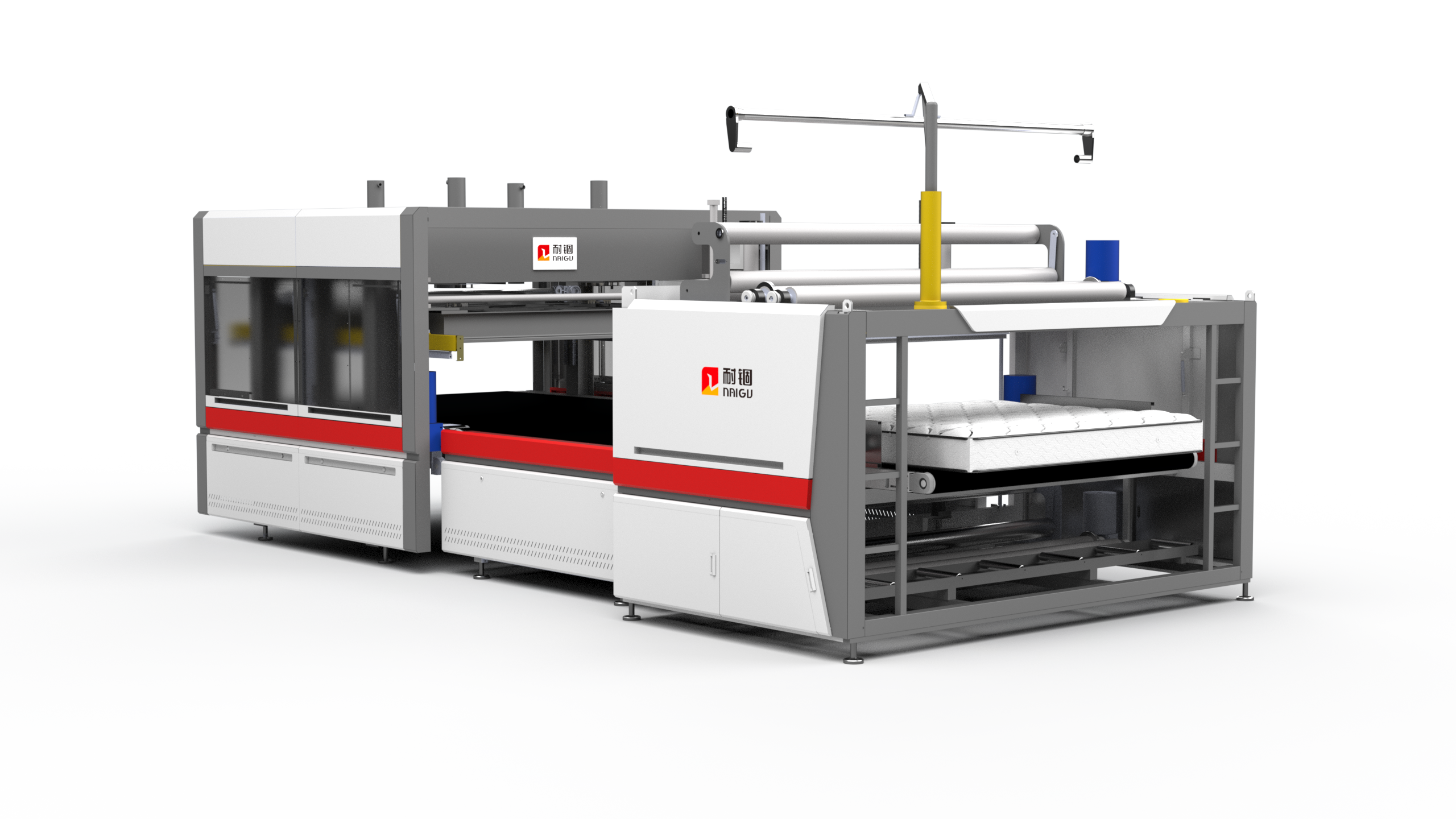
Mattress Packing Equipment for Large-Scale Production |NAIGU
Discover how modern mattress packing equipment helps large-scale mattress manufacturers increase production efficiency, reduce labor requirements, improve packing consistency, and optimize storage and transportation. This guide explains key equipment options and how to select the right solution for high-volume mattress production.
Sep 1st,2026
51 Views
For large-scale mattress manufacturers, efficient packing is essential for maintaining high production capacity, reducing labor costs, and optimizing storage and transportation. As mattress factories expand their output, manual packing processes can become a bottleneck. Mattress packing equipment provides a practical solution by automating key packing operations and improving production consistency.
Why Large-Scale Mattress Factories Need Automated Packing
A high-output mattress production line requires more than efficient mattress manufacturing. The final packing process must also keep pace with production.
Manual mattress packing can involve multiple workers for folding, compressing, sealing, and handling. As production volume increases, this can lead to higher labor requirements and inconsistent packing results.
Automated mattress packing equipment can help manufacturers:
-
Increase packing efficiency
-
Reduce dependence on manual labor
-
Maintain consistent packing quality
-
Reduce mattress package volume
-
Improve warehouse utilization
-
Optimize container loading
-
Support continuous production
For factories producing hundreds or thousands of mattresses per day, these advantages can have a significant impact on overall operating efficiency.
Key Mattress Packing Equipment for Large Production Lines
Different mattress factories require different levels of automation. Common equipment includes mattress bagging machines, compression machines, roll packing machines, and fully automatic mattress packing systems.
1. Mattress Bagging Machine
A mattress bagging machine places a protective PE or plastic bag around the mattress and seals the package.
It is suitable for factories that primarily need efficient protective packing without mattress compression or rolling.
2. Mattress Compression Machine
A mattress compression machine reduces the volume of mattresses before transportation or storage.
Compression is particularly useful for foam and vacuum-compatible mattresses. By reducing package dimensions, manufacturers can potentially load more products into warehouses or shipping containers.
3. Mattress Compression Roll Packing Machine
For factories focused on logistics efficiency, compression roll packing equipment combines compression and rolling processes.
The mattress is compressed and rolled into a compact cylindrical package. This format can significantly reduce the space occupied by individual mattresses and simplify handling during transportation.
4. Fully Automatic Mattress Packing Systems
Large mattress factories may integrate multiple packing processes into an automated production line.
A complete system can connect mattress feeding, compression, folding or rolling, film or bag application, sealing, and product output.
This type of solution is especially suitable for manufacturers with high and stable production volumes.
How Packing Equipment Improves Production Efficiency
The main advantage of automated mattress packing equipment is not simply faster packing. It is the ability to create a more stable and predictable production process.
When equipment is properly matched to production capacity, mattresses can move from manufacturing to final packing with fewer manual handling steps.
This can help factories:
Reduce labor requirements: Automation reduces repetitive manual operations and allows workers to focus on equipment operation, inspection, and other higher-value tasks.
Improve packing consistency: Machines provide more consistent compression, sealing, and package dimensions than purely manual processes.
Increase production capacity: Automated equipment can maintain a stable packing cycle, helping the packing department keep pace with upstream mattress production.
Reduce handling: Integrated systems minimize unnecessary movement between different packing stages.
Choosing the Right Equipment for Large-Scale Production
Before purchasing mattress packing equipment, manufacturers should evaluate several factors.
Production Capacity
Start with the factory's daily or hourly mattress output. Equipment capacity should match the production line rather than becoming a bottleneck.
Mattress Type
Foam, spring, hybrid, and other mattress types can have different compression and packing requirements. The equipment should be selected according to the mattress structure and recovery characteristics.
Mattress Dimensions
Consider mattress width, length, and thickness range. A machine designed for a broad size range can provide greater flexibility for factories producing multiple mattress models.
Packing Material
The film or bag must be compatible with the machine and suitable for the required packing process. Film thickness, width, strength, and sealing performance can all affect the final result.
Factory Layout
Large-scale packing systems require sufficient space for equipment installation, mattress feeding, product discharge, and operator access. Planning the layout in advance can improve material flow and reduce unnecessary movement.
Future Expansion
Manufacturers should also consider expected production growth. Selecting equipment with appropriate capacity and automation potential can reduce the need for major upgrades when production increases.
The Role of Packing Film in Automated Mattress Packing
Equipment performance is closely connected with packing material.
For compression and roll packing applications, PE film needs to provide sufficient strength and flexibility during compression and rolling. The film should also maintain reliable sealing performance and protect the mattress during storage and transportation.
For automated production, manufacturers should evaluate:
-
Film thickness
-
Film width
-
Tensile strength
-
Puncture resistance
-
Sealing performance
-
Stretchability
-
Surface characteristics
-
Compatibility with the packing machine
Choosing the correct film specification helps maintain stable machine operation and consistent finished packages.
How Compression Packing Can Improve Logistics
Transportation is a major cost for mattress manufacturers, especially when products are exported internationally.
Traditional mattresses occupy significant space because of their original dimensions. Compression and roll packing can reduce the package volume, allowing manufacturers to make better use of warehouse and container space.
This can provide several potential benefits:
-
More efficient container utilization
-
Lower storage space requirements
-
Easier loading and unloading
-
More compact warehouse inventory
-
Improved handling during distribution
For export-oriented mattress manufacturers, these logistics advantages can make automated compression packing an important part of the overall production strategy.
Automation for Growing Mattress Manufacturers
Not every factory needs a fully automated system from the beginning. Manufacturers can select equipment according to their current production volume and gradually increase automation as demand grows.
A smaller factory may start with a semi-automatic mattress packing machine, while a high-volume manufacturer may require an integrated automatic compression and roll packing line.
The key is to match the equipment with:
Production volume + mattress specifications + packing material + labor availability + logistics requirements
This approach helps manufacturers avoid both under-capacity and unnecessary investment.
Conclusion
For large-scale mattress production, packing should be treated as an integral part of the manufacturing process rather than the final manual step.
The right mattress packing equipment can improve production efficiency, reduce repetitive labor, provide more consistent packing results, and optimize storage and transportation. For manufacturers producing mattresses at high volumes, compression and roll packing technology can provide additional logistics advantages.
By evaluating production capacity, mattress types, dimensions, film specifications, factory layout, and future expansion plans, manufacturers can select a mattress packing solution that supports long-term production growth.
Looking for mattress packing equipment for large-scale production? Contact NAIGU to discuss your mattress specifications, production capacity, and customized packing solution.


