Categories
How Mattress Manufacturers Improve Production Accuracy Across Different Product Sizes |NAIGU
Discover how mattress manufacturers improve production accuracy across different mattress sizes through precise foam cutting, standardized assembly, flexible machinery, and quality control.
Nov 23rd,2026
0 Views
Mattress manufacturers often produce a wide range of mattress sizes to meet different customer requirements and market preferences. From single and twin mattresses to queen, king, and customized dimensions, each product requires consistent measurements, accurate material processing, and reliable manufacturing operations.
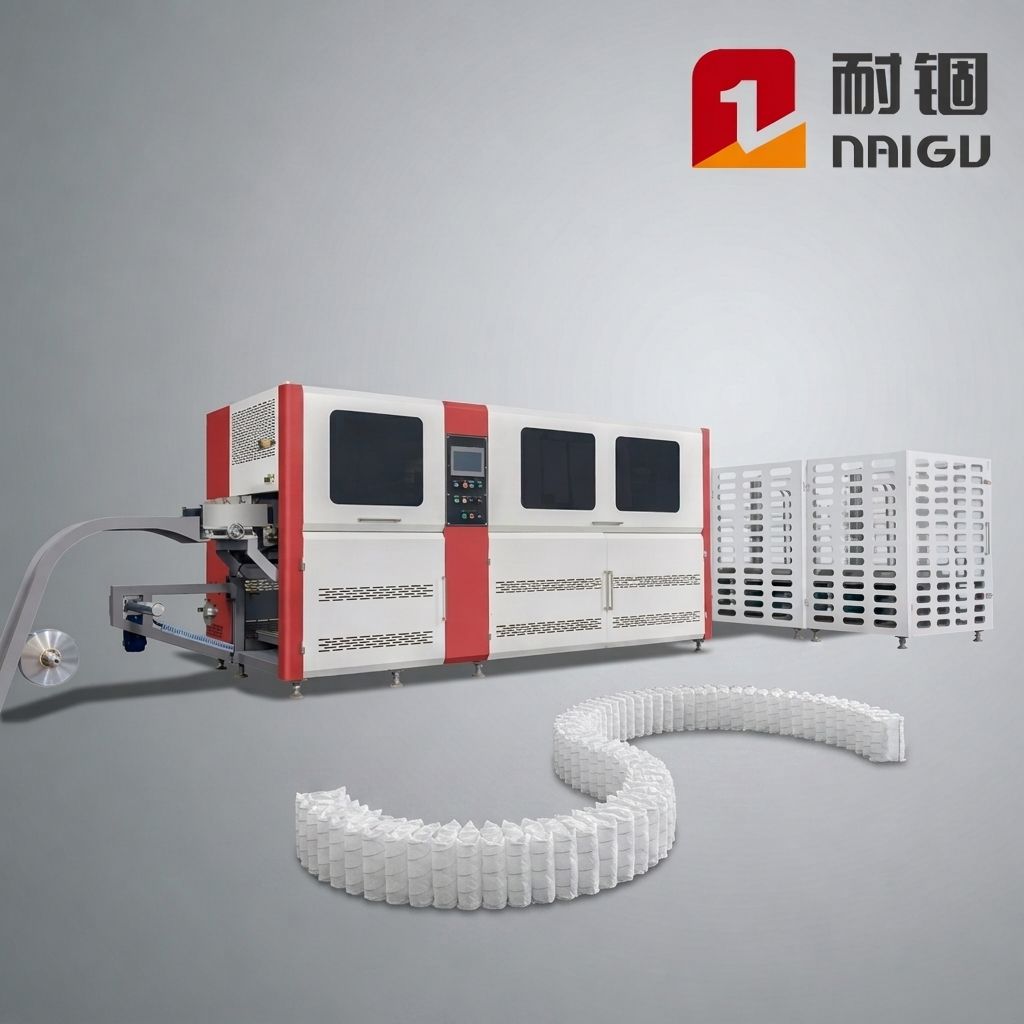
As product variety increases, maintaining production accuracy becomes more challenging. Small measurement deviations during foam cutting, mattress assembly, sewing, and final packing can affect product consistency and overall manufacturing efficiency.
For mattress factories handling multiple product specifications, improving production accuracy requires a combination of standardized processes, suitable machinery, operator training, and quality control.
This article explores practical ways mattress manufacturers can improve production accuracy across different mattress sizes.
1. Establish Standardized Mattress Size Specifications
The first step toward accurate production is establishing clear product specifications.
Different markets may use different standard mattress dimensions. In addition, many manufacturers receive customized orders requiring non-standard lengths, widths, or thicknesses.
Factories should create a standardized specification system covering:
-
Mattress length and width
-
Finished mattress thickness
-
-
-
Border fabric measurements
-
Quilting and sewing requirements
-
Permitted dimensional tolerances
Each product specification should be clearly documented and accessible to relevant production departments.
For example, when manufacturing single, queen, and king mattresses, production teams should use separate specification records to avoid mixing dimensions during material preparation and assembly.
Standardized specifications help reduce measurement errors and improve communication between production departments.
2. Improve Foam Cutting Accuracy
Foam cutting is one of the most important stages affecting finished mattress dimensions.
If foam layers are cut incorrectly, the errors may continue through subsequent assembly processes and affect the final product.
Manufacturers can improve cutting accuracy through several measures:
Use precise cutting equipment
Suitable foam cutting machinery helps maintain consistent dimensions across different mattress specifications.
Standardize cutting parameters
Cutting speed, blade condition, material positioning, and processing settings should be adjusted according to foam characteristics and product requirements.
Check dimensions before assembly
Operators should measure foam components after cutting to identify deviations before they enter the next production stage.
Maintain cutting equipment
Regular inspection and maintenance help prevent inaccuracies caused by worn blades, unstable machine components, or incorrect machine settings.
For factories producing multiple mattress sizes, flexible cutting equipment can also help reduce changeover difficulties between different production orders.
3. Use Accurate Material Positioning and Assembly Procedures
After foam and other mattress components are prepared, accurate positioning becomes essential.
Mattress manufacturers need to ensure that foam layers, spring units, comfort materials, and other components are aligned according to the specified product structure.
Recommended practices include:
-
Using positioning references during material placement
-
Following standardized assembly procedures
-
Checking component dimensions before joining materials
-
Maintaining consistent alignment across different mattress sizes
-
Separating production orders with different specifications
Clear assembly procedures help operators avoid using incorrect components or positioning materials inconsistently.
For factories producing mattresses with multiple internal structures, product-specific assembly instructions can further improve manufacturing accuracy.
4. Maintain Consistent Tape Edge Sewing Quality
Tape edge sewing is an important finishing process that connects the mattress top and bottom panels with the border fabric.
Different mattress sizes require corresponding adjustments to the sewing process. Larger mattresses may involve longer sewing paths, while smaller or customized products require accurate handling around the corners.
To improve tape edge production accuracy, manufacturers should consider:
Adjust machine settings according to mattress dimensions
The operating setup should match the mattress size and thickness to support consistent sewing quality.
Maintain stable mattress positioning
Proper positioning helps reduce uneven edges and inconsistent corner finishing.
Train operators in different product specifications
Operators should understand how different mattress dimensions affect handling and sewing operations.
Inspect finished edges
Regular quality checks can identify uneven stitching, loose seams, or finishing inconsistencies.
Selecting suitable semi-automatic or automatic tape edge machines can also help mattress manufacturers maintain more consistent finishing quality.
5. Introduce Digital Production Records and Specification Management
As mattress product ranges expand, relying entirely on handwritten production instructions can increase the risk of specification errors.
Digital production records help manufacturers organize product information and communicate requirements between departments.
A practical production record may include:
|
Information
|
Purpose
|
|
Product model
|
Identify the mattress type
|
|
Length and width
|
Control finished dimensions
|
|
Thickness
|
Guide material preparation
|
|
Foam specifications
|
Ensure correct material selection
|
|
Sewing requirements
|
Standardize finishing
|
|
Packing requirements
|
Select suitable packing settings
|
|
Order quantity
|
Coordinate production scheduling
|
Digital records also make it easier to track customized orders and repeat previous production specifications.
For factories handling frequent product changes, structured production information can reduce unnecessary communication and setup errors.
6. Select Flexible Machinery for Different Mattress Sizes
Machinery selection directly affects a factory's ability to process different mattress dimensions accurately.
Equipment designed for a narrow range of product specifications may create limitations when manufacturers expand their product lines.
When evaluating new machinery, manufacturers should consider:
-
Supported mattress length and width ranges
-
Minimum and maximum mattress thickness
-
Adjustable operating parameters
-
-
-
Compatibility with existing production equipment
For example, mattress factories producing both standard and customized sizes should choose equipment with suitable adjustment capabilities.
The objective is not simply to purchase machinery with higher production speed, but to ensure that it can handle the factory's actual product specifications consistently.
7. Optimize Mattress Compression and Packing Accuracy
Final packing is another important stage where different mattress sizes require different processing parameters.
Mattress compression and roll packing machines need to accommodate variations in mattress dimensions, thickness, and material characteristics.
Manufacturers should pay attention to:
Compression parameter adjustment
Compression settings should be selected according to mattress construction and material properties.
Film size and positioning
Packing film dimensions should match the mattress specifications to support consistent wrapping.
Rolling consistency
Suitable machine settings help maintain uniform finished roll dimensions.
Finished package inspection
Operators should check packing appearance, sealing quality, and finished package dimensions.
For manufacturers producing mattresses in different sizes, adjustable compression and roll packing equipment can support more flexible production arrangements.
However, compression parameters should always be determined through appropriate product testing to avoid damaging mattress materials.
8. Implement Quality Inspection at Multiple Production Stages
Checking mattress dimensions only after final assembly may result in unnecessary rework.
A more effective approach is to establish inspection procedures throughout the production process.
|
Production stage
|
Recommended inspection
|
|
Material preparation
|
Foam and spring unit dimensions
|
|
Foam cutting
|
Length, width, and thickness
|
|
Mattress assembly
|
Component alignment
|
|
Tape edge sewing
|
Seam quality and edge consistency
|
|
Final inspection
|
Finished mattress dimensions
|
|
Packing
|
Package appearance and dimensions
|
Manufacturers should establish acceptable dimensional tolerances according to product specifications and customer requirements.
Keeping inspection records also helps production managers identify recurring problems and improve manufacturing procedures.
9. Train Operators to Handle Different Product Specifications
Even with suitable machinery, operator experience remains important for maintaining production accuracy.
Workers should understand how mattress dimensions affect machine adjustments, material handling, and quality inspection.
Training programs should cover:
-
Reading mattress production specifications
-
Selecting the correct materials
-
Adjusting machinery for different product sizes
-
Identifying common dimensional deviations
-
Following equipment operating procedures
-
Recording quality inspection results
Cross-training operators across different production stages can also improve coordination when factories switch between product models.
10. Review Production Data and Continuously Improve Processes
Production accuracy should be monitored through measurable performance indicators.
Mattress factory managers can track:
-
Dimensional deviation rates
-
Material waste percentages
-
-
-
Production changeover time
-
Finished product rejection rates
-
By reviewing these indicators regularly, manufacturers can identify whether production problems originate from material preparation, machinery settings, operator procedures, or quality inspection.
Continuous improvement based on production data helps factories maintain consistent manufacturing standards as product variety increases.
Conclusion
Improving production accuracy across different mattress sizes requires coordinated management of product specifications, material processing, machinery operation, assembly procedures, and quality inspection.
From foam cutting and tape edge sewing to final compression and roll packing, every production stage contributes to the dimensions and consistency of the finished mattress.
For manufacturers handling diverse product specifications, investing in flexible machinery, standardized production records, and systematic quality control can help reduce errors and improve overall production efficiency.
Looking to improve accuracy and efficiency in your mattress production and packing processes?
NAIGU Mattress Machinery provides mattress manufacturing and packing equipment, including automatic and semi-automatic tape edge machines, mattress compression roll packing machines, and integrated production line solutions.
Contact NAIGU to discuss your mattress specifications and explore suitable machinery configurations.