Categories
Export Challenges Solved by Compression Roll Packing |NAIGU
Discover how compression roll packing helps furniture exporters solve common challenges such as high freight costs, limited container space, rising labor costs, warehouse requirements, and inefficient loading. Learn how sofa compression roll packing can improve export logistics and reduce transportation costs.
Aug 28th,2026
60 Views
Furniture exporters face many challenges when shipping bulky products across international markets. Large sofa volumes, high freight costs, limited container space, warehouse requirements, and complicated loading operations can all affect export profitability.
For suitable upholstered furniture products, compression roll packing provides an efficient way to reduce packed volume and improve transportation efficiency. By compressing and rolling furniture into compact packages, manufacturers can make better use of container space and simplify logistics.
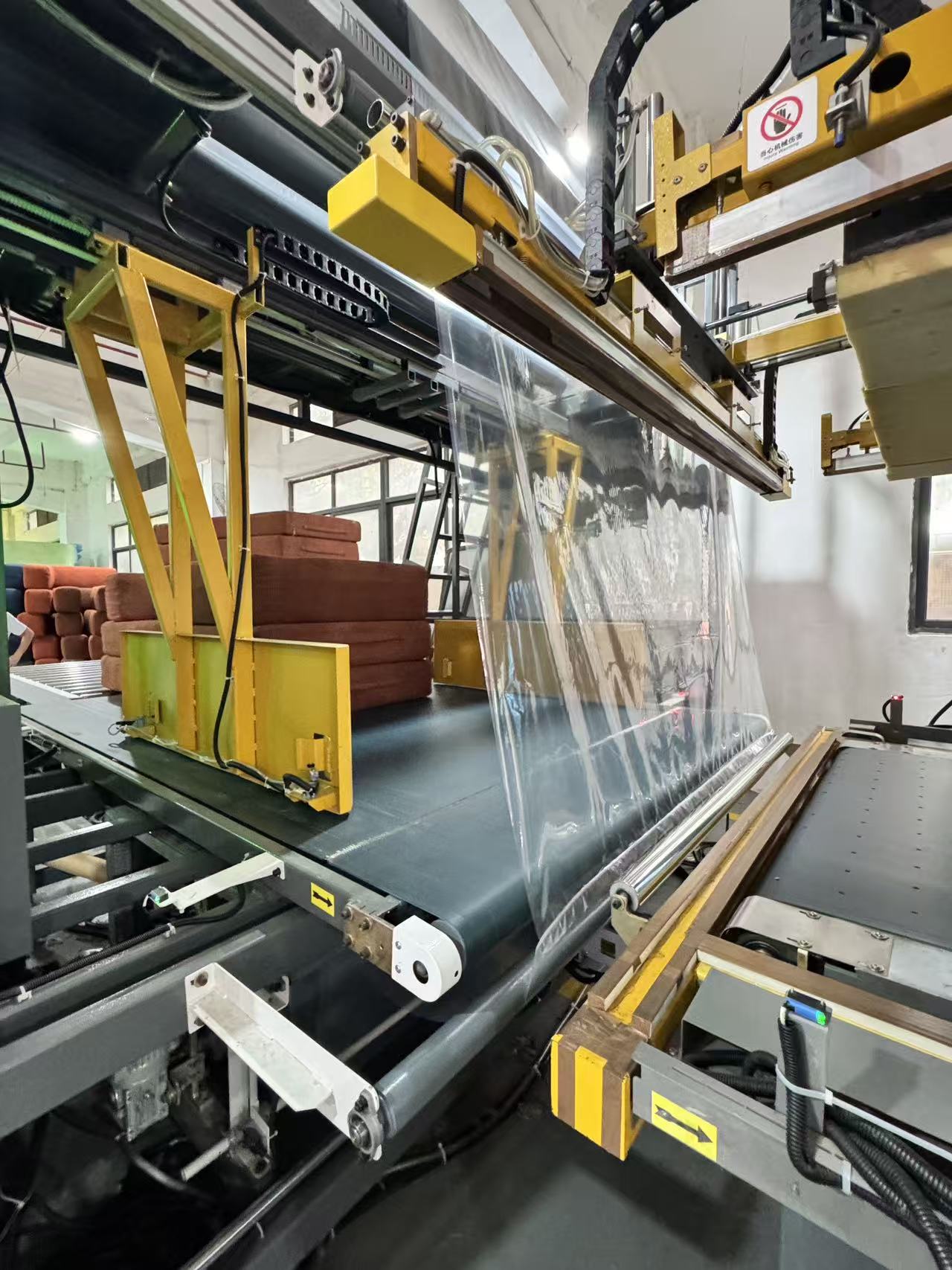
This article explores the major export challenges faced by furniture manufacturers and how compression roll packing can help solve them.
1. High International Freight Costs
Freight cost is one of the biggest concerns for furniture exporters.
Traditional sofas are large and bulky. Even when the actual product weight is relatively low, the furniture can quickly occupy a large amount of container volume.
When container space is limited, exporters may have to ship fewer units per container, increasing the average transportation cost per sofa.
Compression roll packing reduces the volume of suitable furniture products, allowing exporters to potentially load more units into the same container.
As a result, the average freight cost per unit can be reduced.
2. Limited Container Space
Container space is a valuable resource for international furniture transportation.
Traditional sofa packing often leaves unused spaces because of irregular shapes, large cushions, and bulky structures.
Compression roll packing changes the shape and volume of suitable furniture products into a more compact package.
This can help manufacturers:
-
Improve container utilization
-
Reduce unused space
-
Increase loading density
-
Load more units per container
-
Simplify container planning
For exporters shipping hundreds or thousands of sofas internationally, better container utilization can have a significant impact on logistics efficiency.
3. Low Loading Efficiency
Large furniture products can be difficult to arrange inside containers.
Workers may need to spend considerable time positioning, adjusting, and securing bulky packages.
With standardized roll-packed products, package dimensions can become more consistent. This makes container loading easier to plan and can reduce unnecessary handling.
A more standardized packing process can also help factories establish repeatable loading procedures for different export orders.
4. High Warehouse Space Requirements
Furniture requires storage space before shipment.
Traditional sofas can occupy substantial warehouse areas, especially when finished products need to remain in storage while waiting for container loading.
Compression roll packing reduces the packed volume of suitable furniture, which can help manufacturers use warehouse space more efficiently.
Smaller packages may allow factories to:
-
Store more products in the same area
-
Reduce temporary storage requirements
-
Improve warehouse organization
-
Simplify product movement
-
Increase storage density
This can be particularly useful for manufacturers with limited factory or warehouse space.
5. Increasing Labor Costs
Manual furniture packing requires workers to perform repetitive operations such as wrapping, compressing, positioning, and handling.
As labor costs increase, maintaining a manual packing process can become more expensive.
A sofa compression roll packing machine can automate or semi-automate key packing operations.
Depending on the machine configuration, automation can help reduce repetitive manual work and improve labor efficiency.
This allows furniture factories to handle higher production volumes without increasing labor requirements at the same rate.
6. Inconsistent Packing Quality
Manual packing can vary between operators.
Differences in compression, wrapping tension, and package dimensions may result in inconsistent finished packages.
Machine-based compression roll packing provides a more standardized process.
It can help control:
-
Compression level
-
Wrapping tension
-
Package dimensions
-
Rolling process
-
Packing consistency
Consistent packing is particularly important for exporters because furniture may travel long distances through multiple stages of transportation and handling.
7. Difficult International Transportation
Furniture may travel through several logistics stages before reaching the final customer.
A typical export process may include:
Factory → Warehouse → Truck → Port → Container → Ocean Freight → Destination Warehouse → Retailer or Customer
Bulky furniture can create handling challenges at several points in this process.
Compact roll-packed furniture is easier to move and organize compared with oversized packages.
This can help simplify transportation and reduce unnecessary handling throughout the supply chain.
8. Rising Demand for Cross-Border Furniture Sales
Online furniture sales and international distribution have created new opportunities for furniture manufacturers.
However, selling furniture internationally also creates logistics challenges.
Large furniture products can be expensive to ship across borders, making transportation efficiency increasingly important.
Compression roll packing can help suitable furniture products become more compact for export.
This makes the technology particularly relevant to:
-
Furniture exporters
-
Sofa manufacturers
-
Online furniture brands
-
Cross-border e-commerce companies
-
International furniture distributors
-
Wholesale furniture suppliers
9. Reducing Freight Cost per Unit
One of the most important advantages of compression roll packing is the potential to reduce the average freight cost per product.
The basic calculation is:
Freight Cost per Unit = Total Container Freight Cost ÷ Number of Units Loaded
If compression allows more sofas to fit into a container, the freight cost can be distributed across a larger number of products.
For example, if a container previously carried 20 units and improved packing allows 25 units, the average freight cost allocated to each sofa can decrease, assuming the container freight cost remains similar.
Actual loading capacity depends on sofa dimensions, compression performance, package size, container type, and loading method.
10. Improving Container Loading Planning
Compression roll packing can also make logistics planning easier.
When finished packages have relatively standardized dimensions, exporters can estimate container requirements more accurately.
Before shipment, manufacturers can calculate:
-
Package dimensions
-
Number of packages
-
Estimated units per container
-
Container requirements
-
Loading sequence
-
Freight cost per unit
Better planning can help reduce unexpected logistics costs and improve delivery coordination.
11. Protecting Furniture During Export
Reducing volume is not the only consideration.
The packing system must also provide sufficient protection during transportation.
Suitable packing film should have appropriate:
-
Tensile strength
-
Puncture resistance
-
Stretchability
-
Sealing performance
-
Thickness
-
Durability
The correct packing material helps keep the compressed product securely wrapped during handling, transportation, and storage.
Furniture manufacturers should select the film according to their product characteristics and compression requirements.
12. Supporting Furniture Product Standardization
Compression roll packing can encourage manufacturers to standardize the export packing process.
For furniture companies selling multiple sofa models, standardized packing procedures can help improve production planning.
Manufacturers can establish different packing parameters based on:
-
Sofa model
-
Sofa dimensions
-
Foam structure
-
Compression requirements
-
Package size
-
Destination market
This can make it easier for factories to manage export orders and packing operations.
13. Choosing the Right Compression Roll Packing Machine
Not every furniture product is suitable for the same compression method.
Before purchasing a furniture compression packing machine, manufacturers should evaluate:
-
Sofa construction
-
Foam type
-
Foam density
-
Frame structure
-
Sofa dimensions
-
Cushion design
-
Compression recovery
-
Required production capacity
-
Target package dimensions
Product testing is recommended before final equipment selection.
A professional machinery supplier should be able to evaluate the product and recommend an appropriate compression and packing configuration.
Compression Roll Packing vs Traditional Packing
Factor
|
Traditional Furniture Packing
|
Compression Roll Packing
|
Packed Volume
|
Larger
|
Reduced
|
Container Utilization
|
Lower
|
Improved
|
Freight Cost per Unit
|
Higher potential
|
Lower potential
|
Warehouse Space
|
Higher requirement
|
Lower requirement
|
Loading Efficiency
|
Moderate
|
Improved
|
Labor Requirement
|
Higher
|
Can be reduced
|
Package Consistency
|
Operator dependent
|
More standardized
|
Export Logistics
|
More challenging
|
More efficient
|
The actual results depend on product structure, packing materials, machine configuration, and compression settings.
How Furniture Exporters Can Calculate the Benefits
Before investing in a compression roll packing machine, exporters should compare their current logistics costs with the expected performance of the new packing method.
Important figures include:
-
Current packed volume per sofa
-
Number of sofas per container
-
Average freight cost per container
-
Warehouse space requirements
-
Packing labor cost
-
Film consumption
-
Expected packed volume after compression
-
Expected units per container
The potential benefit can then be evaluated using:
Total Packing Benefit = Freight Savings + Labor Savings + Warehouse Savings − Equipment and Operating Costs
This approach provides a more realistic assessment than comparing machine prices alone.
Conclusion
Furniture exporters must manage several challenges, including high freight costs, limited container space, large warehouse requirements, labor expenses, inconsistent packing, and complicated international logistics.
For suitable sofas and upholstered furniture, compression roll packing can address many of these challenges by reducing packed volume and creating more compact, standardized packages.
With the right sofa compression roll packing machine, manufacturers can improve container utilization, potentially increase units per shipment, reduce logistics costs, and create a more efficient export packing process.
For furniture companies planning to expand international markets, compression roll packing can be an important part of a modern furniture export strategy.
NAIGU provides sofa compression roll packing machines and furniture packing solutions for manufacturers and exporters worldwide. Contact NAIGU to discuss your furniture specifications and find a suitable compression roll packing solution for your factory.


