Categories
Common Myths About Compressed Mattresses |NAIGU
Explore the common myths about compressed mattresses and learn the facts behind mattress compression, recovery, roll packing, and packing film selection. This guide helps mattress manufacturers understand how proper compression technology can improve packing, storage, handling, and transportation efficiency.
Sep 2nd,2026
86 Views
Compressed mattresses have become increasingly popular in modern mattress manufacturing, storage, and distribution. By reducing mattress volume through compression and roll packing, manufacturers can improve handling efficiency and make transportation more convenient.
However, some common misconceptions still exist about compressed mattresses. Understanding the facts can help mattress manufacturers, distributors, and consumers make better decisions.
Myth 1: All Mattresses Can Be Compressed
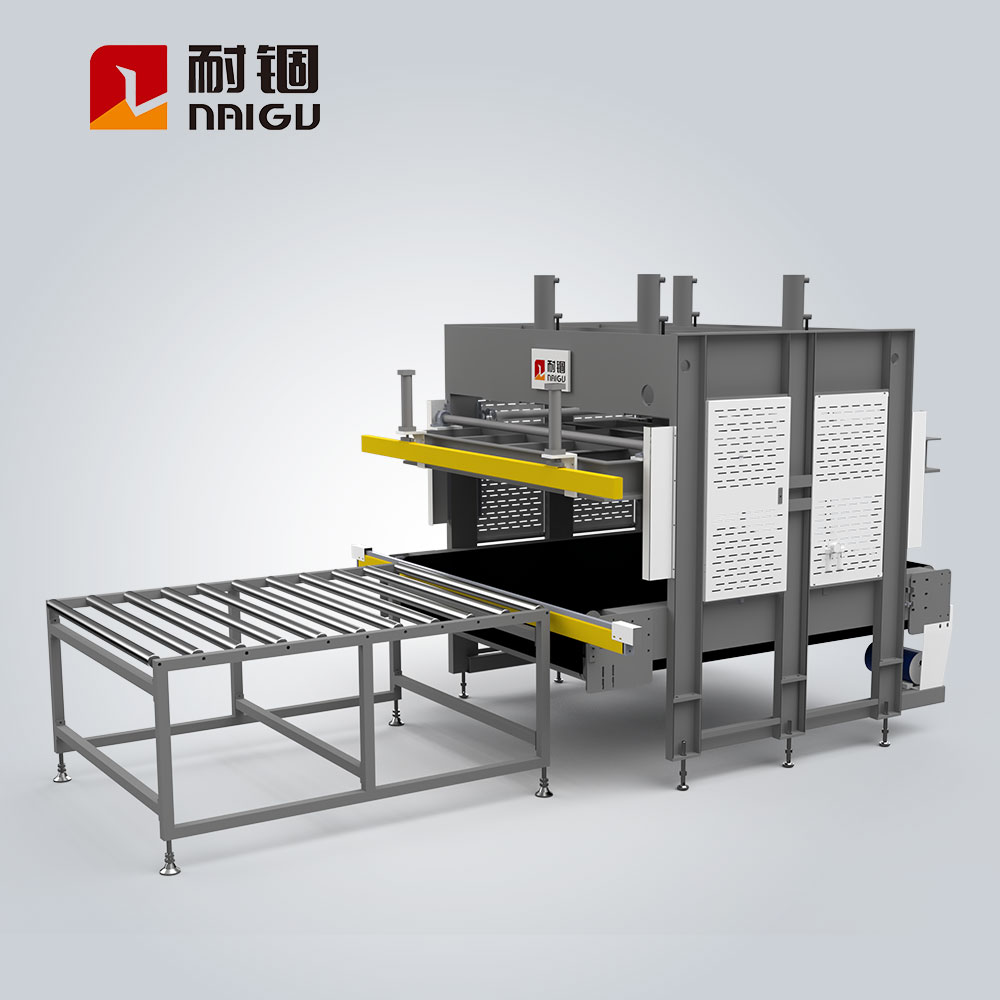
Not every mattress is suitable for compression and roll packing.
Foam mattresses, memory foam mattresses, latex mattresses, and some hybrid mattress constructions may be suitable depending on their materials and structure. Traditional spring mattresses or mattresses with rigid internal components may require different packing methods.
Before selecting a compression solution, manufacturers should evaluate mattress materials, thickness, structure, recovery characteristics, and overall construction.
Myth 2: Compression Permanently Damages the Mattress
Properly controlled compression does not necessarily damage a suitable mattress.
Modern mattress compression equipment is designed to reduce mattress volume within appropriate operating parameters. The compression ratio, compression time, film selection, and mattress material all affect the final result.
For this reason, manufacturers should use a compression process designed specifically for their mattress type rather than applying excessive pressure.
Myth 3: A Compressed Mattress Will Never Return to Its Original Shape
Another common misconception is that a compressed mattress will remain permanently deformed.
Many foam-based mattresses are designed to recover their original dimensions after being unpacked and given sufficient recovery time. However, the recovery performance depends on the mattress material, density, structure, compression conditions, and storage period.
Manufacturers should test their specific mattress models before establishing standard compression and packing procedures.
Myth 4: Compression Packing Is Only Useful for Transportation
Compression packing can provide benefits beyond transportation.
Reducing mattress volume can also make products easier to handle and store. Smaller packed units can help manufacturers and distributors optimize warehouse space and simplify loading and unloading.
For export-oriented mattress factories, compressed roll packing can also make container loading more efficient when the mattress construction is suitable for the process.
Myth 5: Compression Packing Always Requires a Fully Automatic Line
Not every mattress factory needs a fully automatic packing line.
Small and medium-sized manufacturers may benefit from semi-automatic mattress compression and packing equipment, while high-volume factories may require fully automatic solutions.
The appropriate level of automation depends on daily production volume, available labor, mattress specifications, factory layout, and future growth plans.
Myth 6: Any Plastic Film Can Be Used for Mattress Compression
Film selection is an important part of the compression packing process.
The film needs to provide sufficient strength, flexibility, sealing performance, and resistance to tearing during compression, rolling, storage, and transportation.
Using an unsuitable film may lead to film breakage, poor sealing, or unstable packed products. Mattress manufacturers should select film according to the compression equipment and mattress specifications.
Myth 7: Compressed Mattresses Are Difficult to Produce Consistently
With appropriate equipment and standardized operating procedures, compression packing can be performed consistently.
Modern mattress compression roll packing machines can integrate several operations, such as compression, rolling, and packing. Automated or semi-automated processes can reduce variations caused by manual handling and help factories maintain more consistent packing results.
Regular equipment maintenance and correct machine settings are also important for stable production.
Myth 8: Compression Packing Is Only About Saving Space
Space savings are one major advantage, but they are not the only benefit.
A well-designed mattress compression packing process can help manufacturers:
-
Improve packing efficiency
-
Reduce manual handling
-
Optimize warehouse utilization
-
Simplify product transportation
-
Improve loading efficiency
-
Support higher production capacity
-
Standardize the final packing process
For growing mattress factories, these operational improvements can be just as important as reducing product volume.
How to Choose the Right Mattress Compression Solution
Before investing in a mattress compression packing machine, manufacturers should consider several factors:
-
Mattress materials – Determine whether the mattress construction is suitable for compression.
-
Mattress dimensions – Check mattress width, length, and thickness.
-
Daily production – Select machine capacity according to actual output.
-
Packing film – Choose film with suitable strength and flexibility.
-
Automation level – Decide between manual, semi-automatic, and automatic solutions.
-
Factory space – Ensure sufficient space for machine installation and material flow.
-
Future expansion – Consider whether the equipment can support increasing production demand.
Conclusion
Compressed mattresses are an important solution for modern mattress manufacturing and distribution, but many misconceptions remain about their suitability, durability, recovery, and packing requirements.
The key is to match the mattress construction, compression process, packing film, and equipment correctly. With the right mattress compression and packing solution, manufacturers can improve production efficiency while making storage and transportation more manageable.


