Categories
What to Consider When Upgrading Your Mattress Tape Edge Production Process |NAIGU
Learn what to consider when upgrading your mattress tape edge production process, from machine selection and stitching quality to capacity, labor, and maintenance.
Nov 13th,2026
9 Views
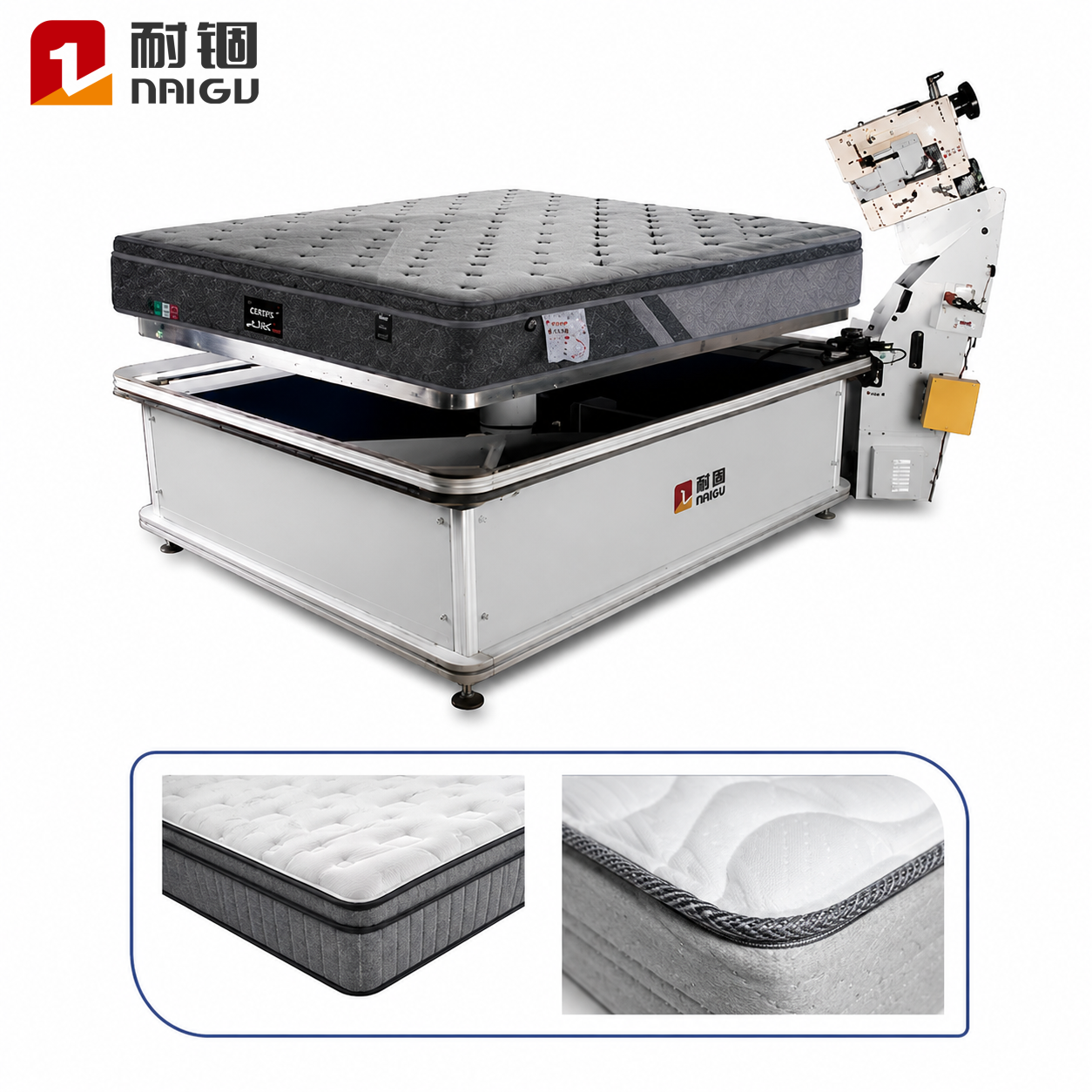
Mattress tape edging is an important stage in mattress manufacturing. It connects the top and bottom panels to the mattress border, helping create a neat edge and a consistent finished appearance. As production demand increases, an existing tape edge process may struggle to maintain stable quality, production efficiency, and delivery schedules.
Upgrading your mattress tape edge production process is not simply about purchasing a newer machine. It requires evaluating current production challenges, mattress specifications, equipment capabilities, operator skills, and future capacity requirements.
This guide outlines the key factors mattress manufacturers should consider before making an upgrade.
1. Evaluate Your Current Production Process
Before selecting new equipment, identify the limitations of your existing tape edge operation.
Common challenges include:
-
Inconsistent stitching quality between operators
-
Uneven mattress edges or corner finishing
-
Slow processing speed during peak production periods
-
Frequent machine adjustments for different mattress sizes
-
High dependence on experienced operators
-
Production bottlenecks between quilting, assembly, and tape edging
Record your current output, operating hours, labor requirements, and product defect rate. These figures provide a baseline for evaluating whether an upgrade delivers meaningful improvements.
2. Match the Machine to Your Mattress Specifications
Not every tape edge machine is suitable for every mattress production requirement. Consider the range of products your factory manufactures.
Important specifications include:
-
Mattress length and width
-
-
-
Foam, spring, or hybrid construction
-
Fabric and border materials
-
Corner style and edge finishing requirements
If your factory produces mattresses in multiple sizes and thicknesses, choose equipment that can accommodate the required product range.
It is also important to confirm the machine's adjustment range and whether it supports the mattress structures you manufacture.
3. Choose Between Semi-Automatic and Automatic Equipment
The level of automation should match your production volume, labor availability, and budget.
Semi-automatic tape edge machines
These machines are suitable for factories that need to improve production consistency while retaining a degree of manual operation. They may be a practical option for small and medium-sized manufacturers or factories with varied production requirements.
Automatic tape edge machines
Automatic models can reduce certain manual operations and support more standardized production. They may be suitable for factories with higher output requirements and relatively stable production specifications.
When comparing models, evaluate actual operating procedures, adjustment requirements, operator training, and achievable output under your production conditions.
4. Consider Production Capacity and Workflow
A tape edge machine should be evaluated as part of the entire mattress production line.
For example, if quilting and mattress assembly can produce more mattresses than the tape edge section can process, upgrading only the upstream equipment will not solve the production bottleneck.
Consider the following:
-
Current daily and monthly mattress output
-
Expected production growth over the next few years
-
Processing time for different mattress sizes
-
Material handling before and after tape edging
-
Space available for equipment installation
-
Connection with assembly and inspection processes
The goal is to create a balanced workflow rather than simply selecting the machine with the highest advertised speed.
5. Check Stitching Quality and Edge Finishing
The main purpose of tape edging is to create a secure and visually consistent connection between mattress panels and borders.
During equipment evaluation, pay attention to:
-
-
-
-
-
Performance with different fabric materials
-
Ease of adjusting machine settings
Request a demonstration using mattress samples similar to your regular production products. This helps determine whether the machine can meet your actual finishing requirements.
6. Evaluate Labor Requirements and Operator Training
An equipment upgrade may change how operators perform their daily tasks. Before purchasing, understand how many operators are required and what training is necessary.
Check whether the machine offers:
-
-
Convenient adjustment procedures
-
Accessible maintenance points
-
Practical troubleshooting guidance
-
Operator training and technical support
A machine that is suitable for your production process should also be manageable by your available workforce after proper training.
7. Review Maintenance and Spare Parts Support
Equipment reliability affects production continuity. A machine with complicated maintenance requirements or limited spare parts support may create additional operating costs.
Before purchasing, ask the supplier about:
-
Routine maintenance schedules
-
-
Availability of replacement components
-
Technical support response procedures
-
Installation and commissioning services
-
For overseas mattress manufacturers, remote technical assistance and clear maintenance documentation are particularly important.
8. Calculate the Total Upgrade Cost
The purchase price is only one part of the investment. A complete evaluation should include installation, training, maintenance, spare parts, and any required factory modifications.
You can compare the current and proposed production processes using these indicators:
|
Evaluation factor
|
What to measure
|
|
Production output
|
Mattresses processed per shift
|
|
Labor
|
Operators required per machine
|
|
Product quality
|
Stitching defects and rework
|
|
Downtime
|
Hours lost to machine issues
|
|
Operating costs
|
Maintenance and spare parts
|
|
Flexibility
|
Supported mattress sizes and types
|
Estimate the potential return based on realistic production data rather than relying only on the supplier's maximum speed figures.
9. Test the Machine Before Finalizing Your Decision
A production trial is one of the most useful steps before upgrading.
Prepare representative mattress samples and ask the supplier to demonstrate the machine under relevant operating conditions.
During the trial, check:
-
Whether the machine supports your mattress dimensions and construction.
-
Whether stitching and corner finishing meet your quality standards.
-
How easily operators can adjust settings.
-
Whether the operating process fits your factory workflow.
-
What maintenance and training are required.
Document the results and compare them with your existing process before making a final decision.
10. Select a Supplier That Can Support Long-Term Production
A reliable equipment supplier should provide more than a machine. Consider the supplier's manufacturing experience, technical capabilities, installation support, spare parts availability, and understanding of mattress production.
For overseas buyers, it is also useful to confirm whether the supplier can provide:
-
Detailed machine specifications
-
Factory acceptance testing
-
-
-
Spare parts recommendations
-
After-sales technical support
A supplier with practical mattress machinery experience can help manufacturers select equipment based on actual production needs.
Conclusion
Upgrading your mattress tape edge production process requires a balance of machine performance, mattress compatibility, production capacity, stitching quality, labor requirements, and long-term maintenance.
Before investing in new equipment, evaluate your existing workflow, define your production goals, and test the machine with representative mattress samples. A well-planned upgrade can help create a more consistent tape edge process and support the future development of your mattress factory.
NAIGU Mattress Machinery provides mattress production equipment solutions, including semi-automatic and automatic tape edge machines. Contact our team to discuss your mattress specifications and production requirements.


