Categories
What Thickness of Film Works Best for Mattress Packing Applications? |NAIGU
Learn how to choose the right PE film thickness for mattress packing. Explore micron ranges, material options, compression packing requirements, and customized mattress film solutions.
Nov 16th,2026
3 Views
Choosing the right film thickness is an important part of mattress packing. The film must provide sufficient protection against dust, moisture, friction, and handling damage while maintaining good flexibility and packing efficiency.
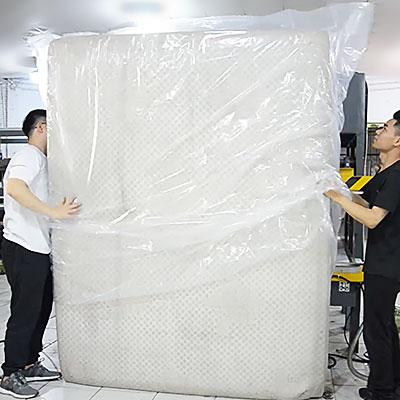
For mattress manufacturers, distributors, and furniture suppliers, selecting the correct PE film thickness can also influence material consumption, packing costs, and overall product presentation.
However, there is no single film thickness suitable for every mattress packing application. The ideal specification depends on mattress size, weight, packing method, transportation conditions, and the required level of protection.
1. Common Film Thicknesses for Mattress Packing
PE film is widely used in mattress packing because of its flexibility, moisture resistance, and adaptability to different packing processes.
Common thickness options include:
Film Thickness
|
Typical Applications
|
30–40 microns
|
Lightweight mattress covers and basic dust protection
|
40–60 microns
|
Standard mattress bags and general-purpose packing
|
60–80 microns
|
Heavier mattresses and more demanding handling conditions
|
80–100 microns
|
Heavy-duty mattress protection and selected compression packing applications
|
Above 100 microns
|
Specialized industrial packing requirements
|
These ranges are general purchasing references rather than fixed industry standards. Actual specifications should be confirmed through sample testing and machine compatibility checks.
2. Consider Mattress Weight and Dimensions
Mattress weight and size are two important factors when selecting film thickness.
Larger and heavier mattresses generally require stronger packing materials, particularly when products are handled frequently during warehousing and transportation.
Buyers should evaluate:
-
Mattress length and width.
-
Mattress thickness and overall weight.
-
Foam, spring, or hybrid mattress construction.
-
Whether the mattress is packed flat, folded, compressed, or rolled.
-
Expected handling and transportation conditions.
For example, a lightweight foam mattress may work well with a relatively thin PE film, while a heavier spring mattress may require a thicker film to provide more reliable protection.
3. Match Film Thickness with the Packing Method
Different mattress packing methods place different demands on PE film.
Flat Mattress Packing
Flat-packed mattresses generally require film that provides basic surface protection against dust, dirt, and moisture.
The selected thickness should offer sufficient coverage without unnecessarily increasing material consumption.
Mattress Compression Packing
Compression packing reduces mattress volume by removing air from the mattress structure. The film must maintain its integrity throughout the packing process.
Important considerations include:
-
Film tensile strength.
-
Puncture resistance.
-
Heat-sealing performance.
-
Film flexibility.
-
Compatibility with compression equipment.
Mattress Roll Packing
Roll packing involves compressing and rolling the mattress into a compact package.
Because the film is exposed to stretching, folding, and mechanical pressure during packing, buyers should pay attention to its strength, flexibility, and resistance to tearing.
A suitable PE film specification helps maintain package integrity during handling and transportation.
4. Understand the Relationship Between Film Thickness and Performance
Film thickness is important, but it is not the only factor determining packing quality.
Two PE films with the same thickness may perform differently because of their material composition and manufacturing processes.
Key performance characteristics include:
Tensile Strength: Determines how well the film withstands pulling forces during packing and handling.
Puncture Resistance: Helps prevent sharp mattress corners, edges, or other external objects from damaging the film.
Elongation: Indicates how much the film can stretch before breaking. This is particularly relevant for compression and roll packing.
Heat-Sealing Performance: Ensures that the film can form reliable seals during automatic or semi-automatic packing.
Transparency: Clear PE film allows mattress labels, product information, and appearance to remain visible.
When evaluating film suppliers, buyers should consider both thickness measurements and actual performance test results.
5. Choose the Right PE Material for Mattress Packing
Different PE materials can be used to manufacture mattress packing film.
Common options include:
-
LDPE Film: Offers good flexibility, softness, and transparency, making it suitable for many mattress bag applications.
-
LLDPE Film: Provides good tensile strength and puncture resistance, which can be beneficial for demanding packing conditions.
-
PE Blended Film: Combines different PE materials to achieve a balance of strength, flexibility, and cost.
The appropriate material formulation depends on the intended application, film thickness, packing equipment, and performance requirements.
Buyers should discuss material composition and testing requirements with their film manufacturers before confirming bulk orders.
6. Test Film Samples Before Ordering in Bulk
Ordering a large quantity of mattress packing film without testing can lead to unnecessary material waste and production problems.
Before placing a bulk order, mattress manufacturers should request samples and evaluate them under actual packing conditions.
Recommended checks include:
-
Measure film thickness and thickness consistency.
-
Check tensile strength and elongation.
-
Evaluate puncture and tear resistance.
-
Test heat-sealing performance.
-
Run the film through the actual packing machine.
-
Inspect finished packages after handling and transportation simulations.
These tests help determine whether the selected film specification meets the factory's production requirements.
7. Work with a Manufacturer That Supports Customized Film Specifications
Standard film thicknesses may not meet every mattress manufacturer's requirements.
Working directly with a PE film manufacturer allows buyers to discuss customized specifications, including:
-
Film thickness and tolerance.
-
Film width and roll length.
-
LDPE or LLDPE material composition.
-
Virgin or blended material options.
-
Transparent or colored film.
-
Printing and customized product identification.
-
Roll weight and packaging requirements.
A manufacturer with flexible production capabilities can help mattress factories develop film specifications that balance protection, packing efficiency, and purchasing costs.
8. How to Reduce Mattress Packing Costs Without Sacrificing Protection
Choosing thicker film does not always mean better packing performance. Excessive thickness may increase material consumption and purchasing costs without providing meaningful additional benefits.
To optimize film purchasing, consider the following approaches:
-
Select film thickness according to actual mattress specifications.
-
Evaluate material performance instead of comparing thickness alone.
-
Standardize film specifications for similar mattress models.
-
Test alternative PE material formulations.
-
Optimize film width to reduce unnecessary material usage.
-
Work with manufacturers to maintain consistent film quality.
The goal is to find the most suitable combination of thickness, material properties, and packing performance.
Conclusion
The best film thickness for mattress packing depends on mattress weight, dimensions, packing method, transportation conditions, and required protection.
As a general reference, 40–60 micron PE film can be considered for many standard mattress packing applications, while heavier mattresses and compression or roll packing processes may require thicker or higher-performance film.
However, the final specification should always be determined through application-based testing.
Looking for reliable PE film for mattress packing?
NAIGU Films manufactures PE film solutions for mattress and furniture packing applications. Contact our team to discuss your required thickness, width, material composition, and customized specifications.


