Categories
The Role of Compression Packing in Modern Furniture Logistics |NAIGU
Explore how compression packing helps modern furniture manufacturers reduce packed volume, improve container utilization, optimize warehouse space, and streamline sofa transportation with automated packing solutions.
Sep 20th,2026
46 Views
Furniture logistics is becoming increasingly important as manufacturers and furniture brands expand into international markets. Sofas and other upholstered furniture can occupy significant space during transportation, making packing efficiency an important factor in logistics planning.
Compression packing provides a way to reduce the packed volume of suitable furniture products and improve handling, storage, and transportation efficiency. With the development of automated compression and roll-packing machines, furniture manufacturers can integrate space-efficient packing into modern production lines.
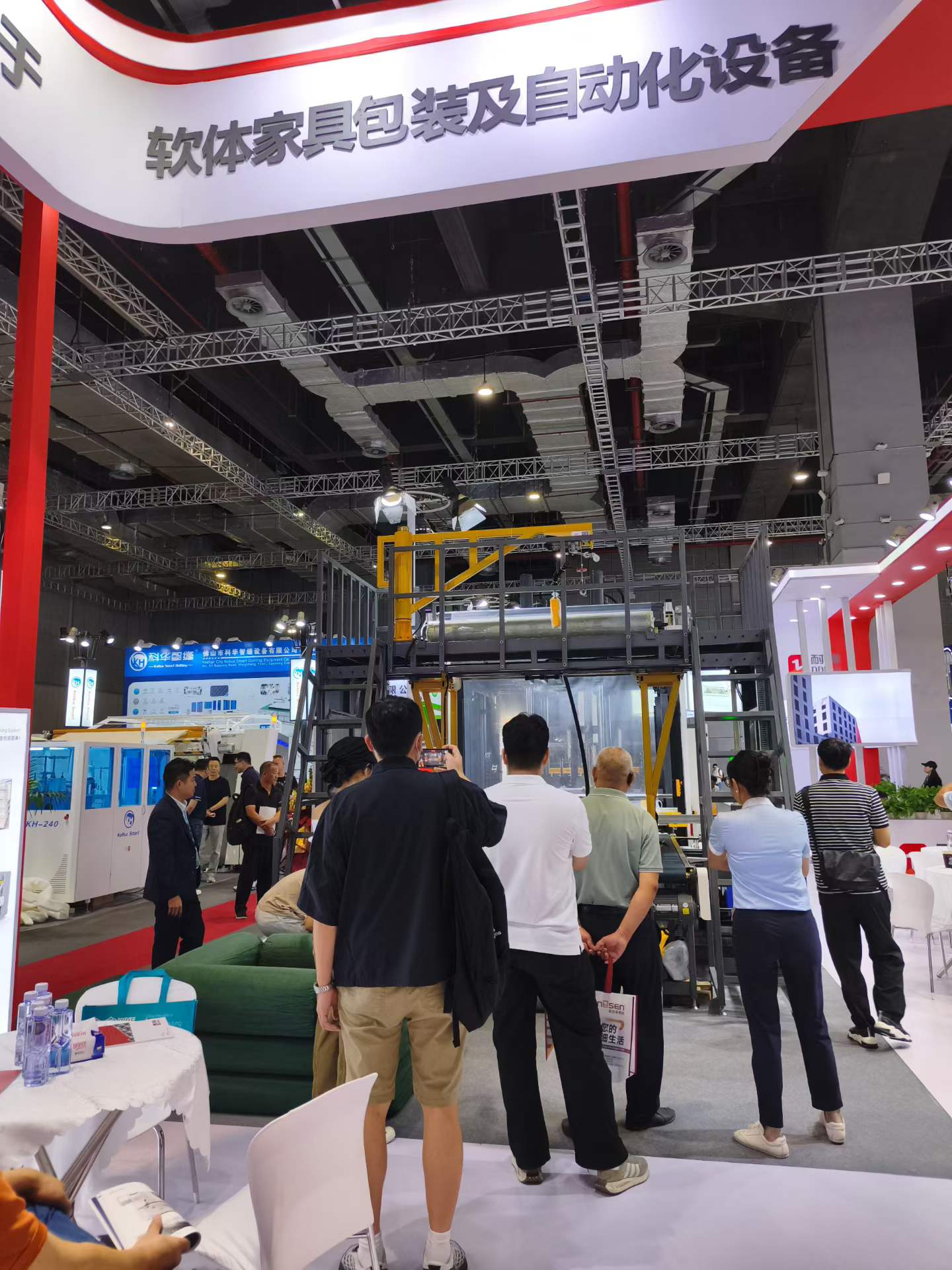
Why Furniture Logistics Needs More Efficient Packing
Unlike many compact products, sofas are large and irregularly shaped. Their volume can become a major limitation during transportation.
Traditional sofa packing may result in:
-
High transportation volume
-
Limited container capacity
-
Greater warehouse space requirements
-
More difficult loading and unloading
-
Higher handling requirements
For furniture manufacturers shipping large quantities internationally, optimizing the packed volume of each sofa can have a direct impact on logistics planning.
How Compression Packing Works
Compression packing uses mechanical force to reduce the volume of suitable upholstered furniture before wrapping and sealing it with packing film.
Depending on the machine and product design, the process may include:
-
Positioning the sofa
-
Compressing the product
-
Wrapping with PE film
-
Sealing the package
-
Forming a compact package or roll
-
Transferring the finished package
The specific process depends on the sofa structure, upholstery materials, dimensions, and required package format.
1. Improve Container Space Utilization
One of the main applications of sofa compression packing is improving the use of transportation space.
A compressed sofa occupies less volume than an unpacked or conventionally packed sofa. This can allow manufacturers to evaluate different loading configurations and potentially increase the number of units transported in a container.
However, the actual loading improvement depends on factors such as sofa dimensions, compression ratio, package size, and container configuration.
2. Reduce Warehouse Space Requirements
Furniture manufacturers often need to store finished products before shipment.
Because sofas are bulky, conventional storage can require substantial warehouse space. Compression packing can reduce the volume of suitable products, allowing factories to make more efficient use of available storage areas.
This can be particularly useful for manufacturers producing large quantities for export orders.
3. Support International Furniture Shipping
International furniture transportation involves multiple stages, including factory handling, inland transportation, container loading, sea freight, unloading, and final delivery.
A compact and stable package can make handling easier throughout this supply chain.
For export-oriented furniture manufacturers, compression packing can therefore become part of a broader logistics strategy rather than simply a final packing process.
4. Improve Handling Efficiency
Large sofas can be difficult to move manually because of their size and shape.
After compression and roll packing, suitable products may become more compact and easier to handle with appropriate equipment.
Automated packing systems can further standardize the movement and packing sequence, reducing repetitive manual operations during production.
5. Automation Makes Compression Packing More Consistent
Modern furniture factories increasingly use automated compression and roll-packing equipment to improve packing consistency.
A sofa compression packing machine can control key parameters such as:
-
Compression pressure
-
Compression time
-
Film feeding
-
Film tension
-
Sealing
-
Package dimensions
Standardized machine settings can help reduce differences between individual packages and improve production efficiency.
6. Film Performance Is Also Important
Compression packing does not depend only on machine performance. The packing film must also be suitable for the application.
During compression, the film may experience significant tension and localized stress. Manufacturers should therefore consider:
-
Film thickness
-
Tensile strength
-
Elongation
-
Puncture resistance
-
Tear resistance
-
Sealing performance
The correct film specification depends on the sofa structure, compression requirements, machine settings, and transportation conditions.
7. Compression Packing Can Support Cost Analysis
Furniture manufacturers should evaluate compression packing based on the complete logistics process rather than looking only at the machine investment.
Useful indicators include:
Transportation cost per sofa = Total transportation cost ÷ Number of sofas shipped
Factories can also compare:
-
Packed volume before and after compression
-
Units loaded per container
-
Warehouse space requirements
-
Packing labor requirements
-
Film consumption
-
Loading and unloading efficiency
These measurements can help manufacturers determine whether compression packing is suitable for their specific products and logistics routes.
8. Not Every Sofa Is Suitable for Compression
Compression packing should be evaluated according to the actual sofa construction.
Important factors include:
-
Foam characteristics
-
Upholstery material
-
Sofa frame structure
-
Cushion design
-
Product dimensions
-
Recovery performance after unpacking
Manufacturers should conduct compression tests before introducing a new packing method into mass production.
The Future of Furniture Logistics
As furniture manufacturers continue to expand international sales, logistics efficiency will remain an important part of production planning.
Compression packing, combined with automated packing equipment and suitable PE film, can provide a more space-efficient approach for suitable upholstered furniture.
The long-term trend is not simply to compress furniture more aggressively, but to create a coordinated system involving product design, packing technology, film performance, warehouse management, and transportation planning.
Conclusion
Compression packing plays an increasingly important role in modern furniture logistics. For suitable sofas and upholstered furniture, reducing packed volume can help manufacturers improve container utilization, warehouse efficiency, handling, and overall logistics planning.
Automated sofa compression and roll-packing machines provide manufacturers with a way to standardize this process and integrate space-efficient packing into modern production lines.
For furniture manufacturers evaluating compression packing, the most important step is to assess the complete system—including the sofa structure, compression parameters, packing film, machine capacity, and transportation requirements—to determine the most appropriate solution.


