Categories
The Relationship Between Mattress Density and Roll Packing Performance |NAIGU
Learn how mattress foam density affects compression, recovery, and roll packing performance. Discover key factors for selecting mattress packing machines and optimizing packing settings.
Oct 30th,2026
35 Views
Mattress density is an important factor affecting compression, recovery, and roll packing performance. For mattress manufacturers, understanding how foam density influences the packing process helps determine suitable compression settings, packing methods, and equipment configurations.
When selecting a mattress roll packing machine, manufacturers should consider not only mattress dimensions and thickness but also foam density, material composition, and recovery characteristics. These factors influence the final package size, packing efficiency, and product condition after unpacking.
1. Understand Mattress Density and Its Importance
Mattress foam density refers to the mass of foam per unit volume, commonly measured in kilograms per cubic meter (kg/m³).
Density is an important specification because it provides information about the amount of material contained within a given volume. However, density alone does not determine mattress firmness, compression resistance, or recovery performance.
Other factors, including foam formulation, cell structure, elasticity, and construction, also influence how a mattress responds to compression.
2. How Foam Density Influences Compression Performance
Mattress compression machines reduce the volume of suitable foam mattresses by applying controlled pressure and removing trapped air from the foam structure.
Different foam densities and formulations may respond differently during compression.
-
Lower-density foam: May compress more easily in some applications, but its recovery and structural stability still depend on the foam formulation.
-
Medium-density foam: May offer a balance of compression response and recovery, depending on its material properties.
-
Higher-density foam: May require different compression settings because of its material structure and mechanical characteristics.
Manufacturers should avoid assuming that higher-density foam always requires greater compression force. Actual performance depends on the foam's compression characteristics and the machine configuration.
3. Density and Mattress Recovery After Unpacking
Recovery performance is one of the most important considerations in mattress roll packing.
After unpacking, compressed foam should gradually return toward its original shape and dimensions. The recovery time and final condition depend on several factors, including:
-
Foam density and formulation.
-
Foam cell structure and elasticity.
-
-
-
Storage temperature and conditions.
-
Time between packing and unpacking.
Excessive compression or unsuitable storage conditions may affect foam recovery. Mattress manufacturers should conduct recovery tests using actual products before establishing standard packing parameters.
4. How Density Affects Final Roll Package Size
The final roll package size depends on mattress thickness, dimensions, foam properties, compression level, and rolling method.
Two mattresses with identical dimensions but different foam densities may have different weights and compression characteristics.
For this reason, mattress manufacturers should evaluate both material specifications and actual compression performance when estimating final package dimensions.
A suitable mattress roll packing machine should provide appropriate adjustment options to accommodate the factory's product range.
5. Choose the Right Roll Packing Machine for Different Foam Types
Different mattress materials require different packing approaches. Selecting equipment based only on mattress size may result in unsuitable compression performance or inconsistent package quality.
Before purchasing a mattress compression roll packing machine, consider:
|
Evaluation Factor
|
What to Check
|
|
Foam density
|
Density range of the mattresses
|
|
Mattress dimensions
|
Width, length, and thickness
|
|
Foam formulation
|
Elasticity and compression characteristics
|
|
Compression ratio
|
Required final package dimensions
|
|
Recovery performance
|
Shape and thickness recovery after unpacking
|
|
Packing method
|
Compression, folding, rolling, or combined processes
|
|
Production capacity
|
Required packing volume per day
|
Testing different foam specifications helps manufacturers identify suitable machine settings and packing methods.
6. Optimize Compression Settings for Consistent Packing
Using identical compression settings for every mattress model may not produce consistent results.
Mattress factories should establish packing parameters based on product specifications and sample testing.
Important parameters include:
-
Compression pressure and duration.
-
Folding and rolling settings.
-
-
Sealing temperature and time.
-
Final package dimensions.
Standardized settings for different mattress models can improve packing consistency and reduce unnecessary machine adjustments during production.
7. Consider Packing Film Compatibility
Mattress density and weight can also influence the requirements for packing film.
Heavier mattresses and demanding handling conditions may require film with suitable tensile strength, tear resistance, and puncture resistance.
Manufacturers should evaluate film thickness, width, material formulation, and sealing performance according to the final package dimensions and packing method.
Using compatible PE packing film helps maintain package integrity during warehouse storage and transportation.
8. Conduct Practical Packing and Recovery Tests
Before introducing a new mattress model into an automated roll packing process, manufacturers should conduct practical tests.
A useful testing process includes:
-
Record the mattress dimensions, density, and material specifications.
-
Test the mattress using the intended compression machine.
-
Measure the final compressed and rolled package dimensions.
-
Inspect film wrapping and sealing quality.
-
Unpack the mattress and monitor its recovery.
-
Compare the results with the required product quality standards.
These tests help manufacturers determine suitable packing parameters for different mattress models and reduce the risk of packing-related quality problems.
Conclusion
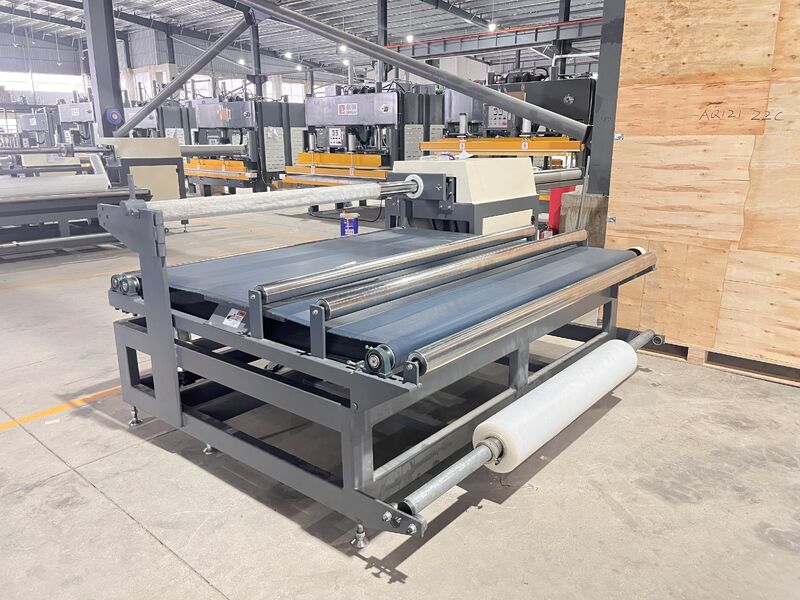
Mattress density plays an important role in compression and roll packing performance, but it should not be evaluated independently. Foam formulation, elasticity, cell structure, compression settings, and recovery characteristics also influence the final packing results.
For mattress manufacturers, understanding these factors helps improve equipment selection, optimize compression settings, and maintain consistent product quality.
NAIGU provides mattress compression and roll packing machines for manufacturers handling different mattress specifications. Contact our team with your mattress dimensions, foam density, and production requirements to discuss a suitable packing solution.


