Categories
Smart Mattress Production Solutions for High-Efficiency Manufacturing |NAIGU
Smart mattress production solutions combine automation, integrated equipment, intelligent controls, and efficient packing processes to help mattress manufacturers increase output, reduce manual labor, improve packing consistency, and optimize production workflows. This article explores how smart manufacturing and automated packing can support high-efficiency mattress production.
Aug 25th,2026
87 Views
As the global mattress industry becomes more competitive, manufacturers are looking for ways to increase production efficiency, reduce labor costs, improve product consistency, and respond faster to changing market demand. Smart mattress production solutions combine automation, intelligent equipment, streamlined workflows, and data-driven production management to help mattress factories build more efficient manufacturing systems.
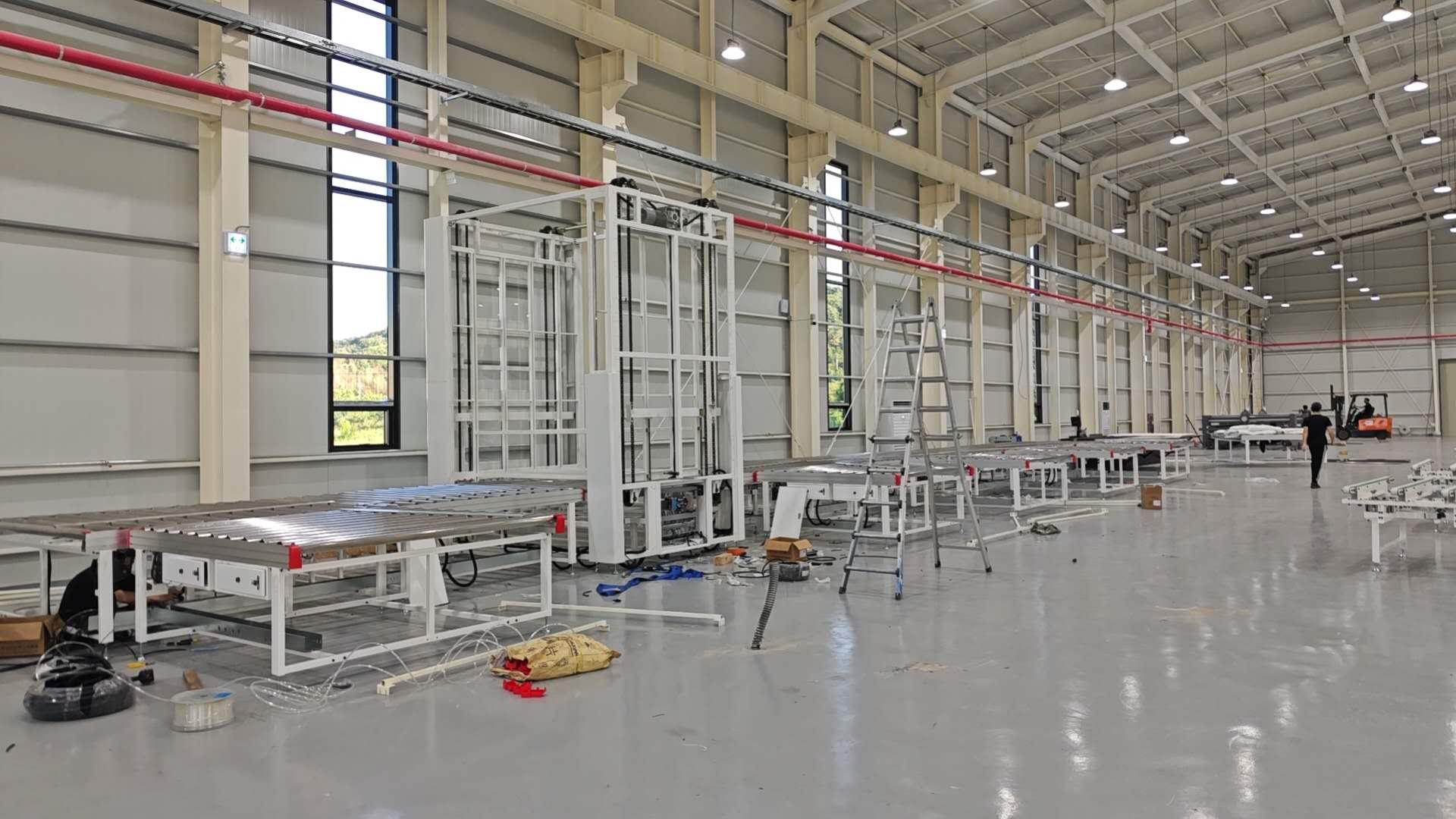
For manufacturers serving export, e-commerce, and large-scale retail markets, smart production is becoming an important strategy for long-term growth.
1. What Is Smart Mattress Production?
Smart mattress production refers to the use of automated machinery, integrated production processes, digital controls, and intelligent management systems to improve the overall manufacturing workflow.
Instead of operating individual machines independently, a smart mattress factory can connect multiple processes into a coordinated production line.
A typical workflow may include:
Raw Materials → Mattress Production → Inspection → Compression → Packing → Rolling → Conveying → Warehousing
The objective is to reduce unnecessary manual handling while maintaining stable production quality.
2. Automation Improves Production Efficiency
Manual production processes can limit output as mattress demand increases. Automated equipment can perform repetitive operations faster and more consistently.
Depending on the factory configuration, automation can be applied to:
-
Mattress assembly
-
Foam processing
-
Spring production
-
Tape edging
-
Compression
-
PE film packing
-
Roll packing
-
Material handling
For high-volume manufacturers, automation helps increase production capacity without increasing labor requirements at the same rate.
3. Smart Mattress Production Lines Reduce Manual Handling
Material handling is often an overlooked source of production inefficiency.
Mattresses are large and heavy products, making frequent manual movement time-consuming. Integrated production lines can reduce unnecessary transportation between different processing stages.
For example, automated conveyors can connect production equipment with inspection and packing stations.
This creates a smoother production flow and helps reduce:
-
Manual transportation
-
Waiting time
-
Product accumulation
-
Workplace congestion
-
Repetitive labor
4. Automated Mattress Packing Improves End-of-Line Efficiency
Packing is one of the most important stages of mattress manufacturing, particularly for export-oriented factories.
A modern mattress packing machine can automate processes such as compression, film packing, sealing, folding, and rolling.
For suitable mattress models, a compression roll packing process can create a compact finished package that is easier to store and transport.
This can help manufacturers improve both production efficiency and logistics performance.
5. Compression Technology Supports Export Logistics
Mattresses are bulky products, so transportation can represent a significant portion of the total logistics cost.
Compression packing reduces the volume of suitable mattresses before transportation. When combined with rolling technology, manufacturers can create compact packages that use container space more efficiently.
Potential benefits include:
-
More mattresses per container
-
Lower freight cost per mattress
-
Reduced warehouse requirements
-
Easier product handling
-
More efficient export logistics
For mattress factories targeting overseas markets, compression technology can therefore be an important part of a smart packing strategy.
6. Intelligent Controls Improve Process Consistency
Smart production equipment can use digital control systems to manage important production parameters.
Depending on the equipment, manufacturers may be able to control and monitor factors such as:
-
Production speed
-
Compression settings
-
Film feeding
-
Sealing temperature
-
Machine operation status
-
Production quantity
Consistent process control can reduce variations caused by manual operation and help manufacturers maintain stable product quality.
7. Data Helps Manufacturers Identify Bottlenecks
Smart manufacturing is not only about automation. Production data can also help factory managers understand how their production lines are performing.
Manufacturers can monitor indicators such as:
-
Output per shift
-
Machine utilization
-
Downtime
-
Production cycle time
-
Labor requirements
-
Packing efficiency
By analyzing this information, factories can identify bottlenecks and make targeted improvements.
For example, if mattress production is significantly faster than packing capacity, upgrading the packing section may provide a greater benefit than increasing upstream production.
8. Smart Manufacturing Supports Flexible Production
Modern mattress manufacturers often produce multiple mattress sizes, thicknesses, and product types.
A flexible production system allows factories to adjust equipment settings for different products without extensive manual changes.
This is especially valuable for:
-
Online mattress brands
-
OEM manufacturers
-
Export factories
-
Custom mattress producers
-
Factories with multiple product lines
Flexible automation can help manufacturers respond more efficiently to changing customer requirements.
9. Reducing Labor Costs
Labor availability and labor costs are important considerations for mattress factories around the world.
Automation does not necessarily eliminate workers, but it can reduce the amount of repetitive manual work required.
Employees can focus more on:
-
Machine operation
-
Quality inspection
-
Production monitoring
-
Maintenance
-
Material management
This can improve labor productivity and help factories manage growing production volumes with a more efficient workforce.
10. Improving Packing Material Efficiency
Smart packing systems can also help manufacturers control material consumption.
For example, automated film feeding and sealing can provide more consistent packing than manual operations.
For mattress compression packing, manufacturers should select film according to:
-
Mattress material
-
Mattress dimensions
-
Compression ratio
-
Film thickness
-
Film strength
-
Transportation conditions
The goal is to achieve reliable packing performance while avoiding unnecessary film consumption.
11. Building a Scalable Mattress Factory
A smart production solution should support both current production and future expansion.
Manufacturers should consider:
-
Current daily output
-
Expected order growth
-
Product range
-
Available factory space
-
Labor costs
-
Export volume
-
Automation requirements
-
Equipment integration
A modular approach can allow manufacturers to gradually increase automation instead of replacing the entire production system at once.
12. How to Choose a Smart Mattress Production Solution
There is no single solution suitable for every mattress factory.
Before investing in equipment, manufacturers should evaluate their complete production process.
Important questions include:
-
What is the current daily mattress output?
-
Which processes require the most labor?
-
Where are the main production bottlenecks?
-
What mattress sizes and thicknesses are produced?
-
How many mattresses are exported?
-
What are the current packing and logistics costs?
-
What level of automation is required?
-
What production capacity will be needed in the next three to five years?
Answering these questions can help manufacturers select equipment based on actual production needs rather than simply choosing the most automated solution.
Conclusion
Smart mattress production solutions combine automation, integrated equipment, intelligent controls, and efficient packing processes to help manufacturers improve production performance.
From mattress production and inspection to compression roll packing, every stage can contribute to a more efficient manufacturing workflow. For factories serving export and e-commerce markets, automation can also improve packing consistency, reduce manual handling, optimize warehouse space, and support more efficient logistics.
NAIGU provides mattress production lines, mattress packing machines, compression roll packing machines, and automated packing solutions for mattress manufacturers worldwide.
By evaluating your mattress specifications, production capacity, factory layout, and future growth plans, NAIGU can help develop a suitable mattress production and packing solution.
Looking to build a more efficient mattress factory? Contact NAIGU to discuss your production requirements and automation goals.


