Learn how to plan a mattress production line from raw material processing to finished product packing. Explore essential machinery, factory layout, production capacity, automation, and investment considerations.
Planning a mattress production line requires careful consideration of manufacturing processes, equipment selection, factory layout, production capacity, and investment costs. For new mattress manufacturers, a well-organized production line helps establish an efficient workflow from raw material preparation to finished mattress packing.
For existing factories, production line planning is equally important when expanding capacity, upgrading machinery, or introducing automated manufacturing processes.
This guide explains the key stages of planning a mattress production line and the equipment required at each stage.
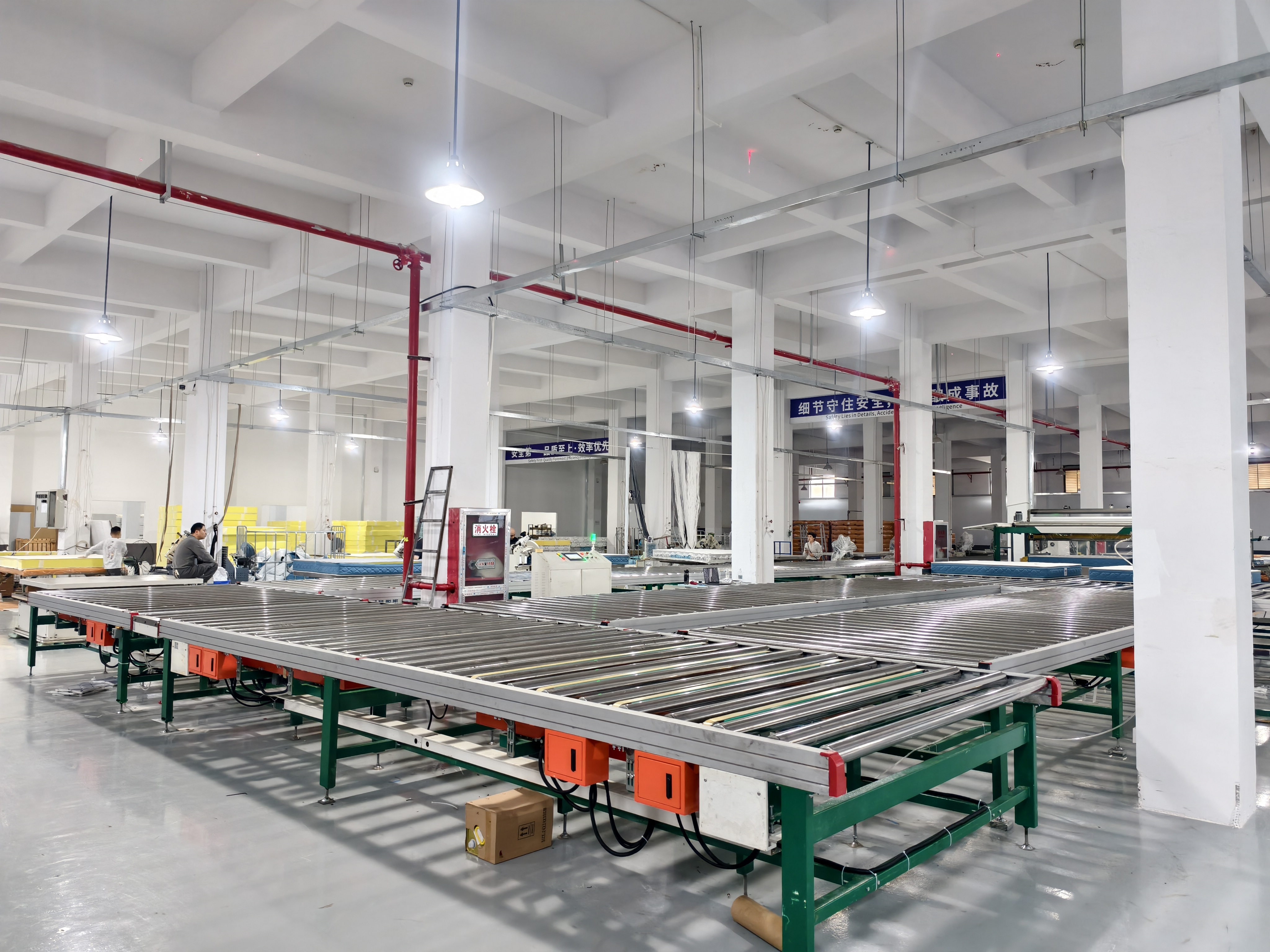
1. Define Your Mattress Products and Production Targets
Before selecting machinery, manufacturers should determine what types of mattresses they intend to produce.
Different mattress structures require different manufacturing processes and equipment configurations.
Common mattress types include:
Manufacturers should also establish their expected daily or monthly production capacity.
Important planning factors include:
-
Mattress dimensions and thickness.
-
Product materials and construction.
-
Expected daily production output.
-
Number of product models.
-
-
-
Future expansion requirements.
These details provide a foundation for selecting suitable machinery and designing the production workflow.
2. Plan Raw Material Preparation and Processing
Raw material preparation is the starting point of mattress manufacturing.
Depending on the mattress type, factories may need to process foam blocks, springs, fabrics, adhesives, and other components.
Typical equipment includes:
-
-
-
Spring manufacturing machines
-
Pocket spring assembly machines
-
-
Material handling systems
The equipment configuration should match the factory's product range and determine whether certain components will be manufactured in-house or purchased from external suppliers.
For new factories, outsourcing some raw material processing can help reduce initial equipment investment.
3. Arrange Mattress Quilting and Fabric Preparation
Mattress covers play an important role in product appearance, comfort, and overall quality.
Quilting machines are commonly used to stitch fabric layers together with foam, fiber, or other filling materials.
The production process may include:
-
-
-
-
-
Finished panel inspection.
Manufacturers should select quilting equipment according to fabric width, stitching patterns, production volume, and mattress design requirements.
Proper fabric preparation helps ensure consistent dimensions and appearance during mattress assembly.
4. Organize Mattress Assembly and Gluing
After preparing the internal mattress structure and fabric components, the next stage is mattress assembly.
For foam mattresses, different foam layers may need to be bonded together using suitable adhesives.
For spring mattresses, the spring unit is combined with foam, padding, and other materials according to the product design.
Common equipment includes:
-
-
Adhesive spraying systems
-
Mattress assembly workstations
-
Foam positioning equipment
-
An organized assembly process helps reduce unnecessary material movement and improves production consistency.
5. Select the Right Mattress Tape Edge Machine
Tape edging is an important manufacturing stage that joins the mattress top and bottom panels with the side border.
The process helps create a finished mattress structure with consistent edges and appearance.
Common equipment options include:
-
Semi-automatic mattress tape edge machines
-
Automatic mattress tape edge machines
Semi-automatic machines are suitable for factories requiring operational flexibility and moderate production capacity.
Automatic models are worth considering for manufacturers seeking reduced manual intervention and more standardized sewing operations.
When selecting a tape edge machine, consider mattress dimensions, thickness range, sewing performance, operator requirements, and expected production output.
6. Plan Mattress Inspection and Quality Control
Before entering the packing stage, finished mattresses should undergo quality inspection.
A structured inspection process helps identify manufacturing defects and maintain consistent product standards.
Common inspection points include:
-
Mattress dimensions and thickness.
-
Surface appearance and fabric condition.
-
-
Foam and spring construction.
-
Adhesive bonding performance.
-
Overall product consistency.
An inspection workstation should be positioned between mattress assembly and final packing to reduce unnecessary product movement.
7. Configure the Mattress Compression and Packing Section
The packing section is the final stage of mattress manufacturing and plays an important role in storage, transportation, and product delivery.
Different mattress products require different packing methods depending on their structure, materials, and distribution requirements.
Common packing equipment includes:
-
Mattress bagging machines
-
Mattress compression machines
-
Mattress folding machines
-
Mattress roll packing machines
-
Automatic sealing and cutting equipment
For manufacturers supplying online retailers and export markets, compression roll packing can help reduce package volume and improve transportation efficiency.
However, not every mattress is suitable for compression or roll packing. Buyers should confirm product compatibility before selecting equipment.
8. Design an Efficient Factory Layout
A well-planned factory layout helps connect each manufacturing stage and reduce unnecessary transportation between workstations.
A typical mattress production workflow may follow this sequence:
2. Foam & Spring Processing
3. Fabric Quilting & Preparation
4. Mattress Assembly & Gluing
8. Finished Product Warehouse
When designing the layout, manufacturers should consider:
-
Machine dimensions and installation clearance.
-
Raw material storage capacity.
-
Production line movement.
-
Worker access and safety.
-
Electrical and compressed air connections.
-
Finished product storage and loading areas.
-
Space for future equipment expansion.
The actual layout should be adjusted according to the factory building, production capacity, and selected machine models.
9. Balance Production Capacity Across Different Stages
One common mistake when planning a mattress production line is selecting individual machines without considering the overall production capacity.
For example, if the assembly section produces mattresses faster than the tape edging or packing section can process them, unfinished products may accumulate between workstations.
Manufacturers should compare the expected output of each production stage and identify potential bottlenecks.
|
Production Stage
|
Key Planning Consideration
|
|
Raw material processing
|
Material preparation capacity
|
|
Quilting
|
Fabric processing speed
|
|
Assembly
|
Mattress assembly output
|
|
Tape edging
|
Sewing capacity
|
|
Quality inspection
|
Inspection time per mattress
|
|
Final packing
|
Packing output per hour
|
A balanced production line helps maintain smoother operations and improves the utilization of factory equipment.
10. Consider Automation and Future Expansion
New mattress factories do not necessarily need to invest in a fully automatic production line immediately.
A phased investment strategy can help control initial costs while preparing for future growth.
|
Development Stage
|
Equipment Strategy
|
|
Initial production
|
Essential foam processing, assembly, sewing, and packing equipment
|
|
Capacity expansion
|
Additional machines and improved material handling
|
|
Automation upgrade
|
Automatic tape edging, feeding, and packing systems
|
|
Advanced production
|
Integrated and intelligent mattress production solutions
|
Manufacturers should also consider whether the selected machines can be connected with future conveyors, automated feeding systems, and intelligent production equipment.
11. Evaluate the Total Factory Investment
Equipment purchasing is only one part of the total cost of establishing a mattress factory.
A complete investment assessment should include:
-
-
Factory construction and renovation.
-
Electrical and utility infrastructure.
-
-
Installation and commissioning.
-
Worker recruitment and training.
-
Maintenance and spare parts.
-
-
Comparing different equipment configurations can help investors select a practical production solution based on their budget and business objectives.
Conclusion
Planning a mattress production line from raw materials to finished products requires coordination across every manufacturing stage. From foam processing and quilting to mattress assembly, tape edging, inspection, and final packing, each process should be carefully integrated into the overall factory workflow.
For new investors, proper equipment selection and factory layout planning can help reduce unnecessary investment and establish an efficient production foundation. For existing manufacturers, upgrading individual production stages can improve capacity and support long-term business growth.
Planning to establish or upgrade your mattress factory?
NAIGU provides mattress manufacturing machinery, tape edge machines, compression roll packing equipment, and customized production solutions for mattress manufacturers worldwide.
Contact NAIGU to discuss your product specifications, factory space, production targets, and equipment requirements.


