Categories
How to Compare Different Mattress Packing Machine Suppliers |NAIGU
Learn how to compare mattress packing machine suppliers by evaluating machine specifications, packing efficiency, pricing, customization, manufacturing experience, and after-sales support.
Oct 19th,2026
10 Views
Choosing the right mattress packing machine supplier is an important decision for mattress manufacturers. A reliable supplier can help improve packing efficiency, reduce labor costs, optimize storage and transportation, and maintain consistent product quality. However, different suppliers may offer machines with similar functions but significant differences in performance, automation, technical support, and long-term operating costs.
Instead of comparing suppliers based on price alone, mattress manufacturers should evaluate several key factors before making a purchasing decision.
1. Compare Machine Functions and Technical Specifications
The first step is to determine whether each supplier can provide a machine that matches your production requirements. Mattress packing equipment varies in automation level, compression capability, packing methods, and production capacity.
When comparing suppliers, consider the following specifications:
-
Packing method: Determine whether the machine supports flat packing, compression packing, folding, or roll packing.
-
Mattress dimensions: Check the maximum mattress length, width, and thickness supported by the machine.
-
Production capacity: Evaluate the actual packing speed and expected daily output.
-
Automation level: Compare manual, semi-automatic, and fully automatic solutions.
-
Packing materials: Confirm compatibility with the PE film, plastic bags, or other packing materials used in your factory.
A machine with more functions is not always the best choice. The ideal solution should match your mattress types, production volume, and existing workflow.
2. Evaluate the Supplier's Manufacturing Experience
A supplier's manufacturing experience can provide useful insights into its technical capabilities and product reliability. Companies specializing in mattress machinery may have a better understanding of the challenges associated with mattress compression, folding, sealing, and roll packing.
Before choosing a supplier, check whether it has:
-
Experience manufacturing mattress packing machines.
-
A dedicated engineering and production team.
-
An established quality control process.
-
Experience serving mattress and furniture manufacturers.
-
The ability to customize equipment for different production requirements.
It is also helpful to review factory photos, machine demonstrations, customer feedback, and installation cases. These materials can help buyers understand how the supplier's equipment performs in real production environments.
3. Compare Packing Efficiency and Final Product Quality
Packing speed is important, but it should not be the only performance indicator. A machine must also deliver consistent packing results and protect the mattress during storage and transportation.
When evaluating different suppliers, ask them to demonstrate the packing process using mattresses similar to those produced in your factory.
Pay attention to compression consistency, sealing quality, film positioning, roll diameter, and the stability of the finished package. If your products vary significantly in size or thickness, confirm that the machine can handle these variations without frequent manual adjustments.
For factories planning to increase production, fully automatic mattress compression and roll packing lines may help reduce repetitive manual work and improve the consistency of the packing process.
4. Look Beyond the Initial Machine Price
Machine prices can vary considerably depending on automation, configuration, customization, and included accessories. A lower quotation may appear attractive, but it is important to understand exactly what each supplier includes.
Compare the following cost items:
|
Cost factor
|
What to check
|
|
Machine price
|
Standard configuration and included equipment
|
|
Installation
|
Installation, commissioning, and training fees
|
|
Transportation
|
Packing, shipping, and delivery costs
|
|
Spare parts
|
Availability and replacement costs
|
|
Maintenance
|
Routine servicing and maintenance requirements
|
|
Operating costs
|
Labor, electricity, and packing material consumption
|
A more expensive machine may provide better long-term value if it reduces labor requirements, material waste, or downtime. Buyers should compare the total cost of ownership rather than focusing exclusively on the initial purchase price.
5. Check Customization Capabilities
Mattress factories differ in product dimensions, production layouts, packing materials, and output targets. A suitable supplier should be able to recommend a configuration based on these specific requirements.
For example, a factory producing standard foam mattresses may need a different solution from a manufacturer handling multiple mattress sizes, thick mattresses, or products that require folding before roll packing.
Ask suppliers whether they can customize machine configurations, conveyor systems, feeding methods, packing dimensions, and connections with existing production lines.
Providing accurate product specifications and factory requirements at the quotation stage helps suppliers recommend appropriate equipment and reduces the risk of purchasing an unsuitable machine.
6. Evaluate After-Sales Service and Technical Support
After-sales support is especially important for manufacturers operating production lines continuously. Equipment downtime can interrupt packing operations and affect delivery schedules.
Before placing an order, clarify the supplier's technical support arrangements.
Important questions include:
-
Is remote troubleshooting available?
-
Are operating manuals and training provided?
-
Can the supplier supply spare parts when needed?
-
How are installation and commissioning handled?
-
Is technical assistance available if the machine develops a problem?
For international buyers, communication efficiency and the availability of remote support are particularly important. A supplier with a clear service process can make machine installation and daily operation easier to manage.
7. Review Customer Cases and Real Production Performance
Customer cases can help buyers understand whether a supplier's machines are suitable for their intended applications. However, product photographs alone may not provide enough information to assess performance.
Look for demonstrations showing the complete packing process, including mattress feeding, compression, sealing, and final roll formation where applicable.
When possible, ask for references from manufacturers with similar products or production volumes. Their experiences may provide useful information about operating stability, maintenance requirements, and the supplier's response to technical issues.
Comparing real production results is often more informative than relying on general marketing claims.
8. Compare Suppliers Using a Structured Checklist
A comparison checklist can help purchasing teams evaluate multiple suppliers consistently.
|
Evaluation criteria
|
Key question
|
|
Technical suitability
|
Does the machine meet your product requirements?
|
|
Production capacity
|
Can it support current and future output?
|
|
Packing quality
|
Does it produce stable, consistent packages?
|
|
Manufacturing capability
|
Does the supplier have relevant experience?
|
|
Customization
|
Can the configuration match your workflow?
|
|
Total investment
|
Are installation and operating costs clear?
|
|
After-sales support
|
Is technical assistance readily available?
|
|
Delivery schedule
|
Can the supplier meet your project timeline?
|
Assigning a score to each category can make it easier to identify the supplier offering the best overall value. The weighting should reflect your priorities: for example, production stability may be more important than advanced automation for a smaller factory, while labor reduction and line integration may be critical for a high-volume manufacturer.
9. Choose a Supplier That Supports Long-Term Growth
The best mattress packing machine supplier should meet your current production needs while allowing room for future expansion.
If your factory plans to increase output, introduce new mattress sizes, or automate more production stages, discuss these plans with potential suppliers before purchasing equipment. A well-planned solution can reduce the need for major equipment changes as production requirements evolve.
It is also worth considering whether the supplier can provide complementary equipment, such as mattress folding machines, compression systems, roll packing machines, and automatic packing lines. Working with a supplier that understands the complete production process may simplify equipment integration and technical coordination.
Conclusion
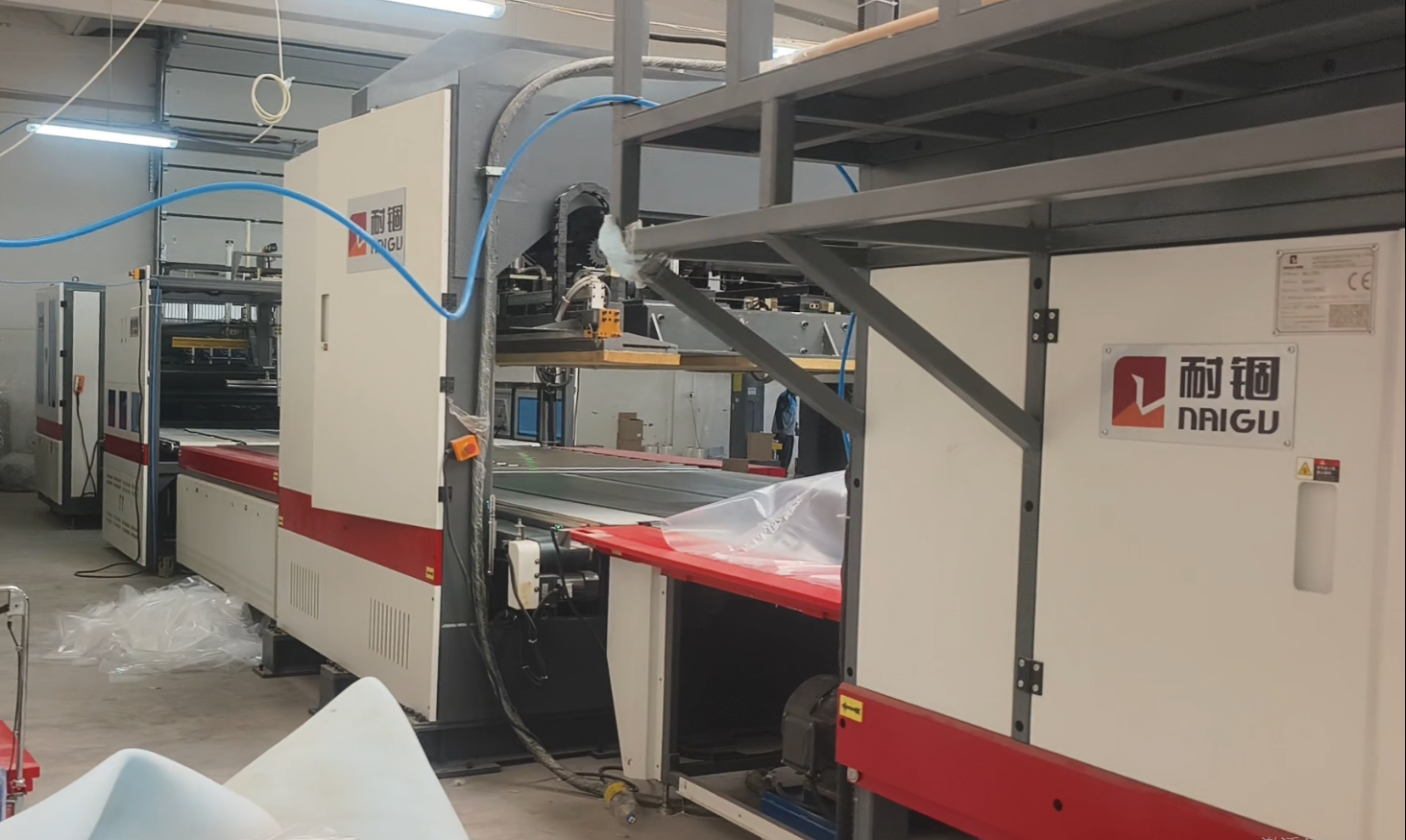
Comparing mattress packing machine suppliers requires more than collecting quotations. Buyers should evaluate technical specifications, manufacturing experience, packing performance, customization capabilities, total investment, and after-sales service.
By comparing these factors systematically and requesting practical machine demonstrations, mattress manufacturers can make more informed purchasing decisions and select equipment that supports efficient, reliable production over the long term.
NAIGU specializes in mattress packing machinery and provides solutions for different mattress types, production capacities, and factory requirements. From individual packing machines to automated compression and roll packing lines, we help mattress manufacturers identify suitable equipment for their production needs.
Contact NAIGU to discuss your mattress dimensions, packing requirements, and target production capacity. Our team can recommend a suitable machine configuration for your factory.


