Categories
How to Choose the Right Smart Mattress Production Line for Your Factory |NAIGU
How to Choose the Right Smart Mattress Production Line for Your Factory explains the key factors mattress manufacturers should consider when selecting an automated production line. From mattress types and production capacity to factory layout, automation level, packing requirements, operating costs, and future expansion, this guide helps manufacturers choose a smart mattress production solution that fits their current needs and supports long-term growth.
Aug 19th,2026
59 Views
Choosing the right smart mattress production line is an important decision for mattress manufacturers that want to improve production efficiency, product consistency, labor utilization, and long-term competitiveness. As mattress factories move toward automation and digital manufacturing, selecting equipment based only on machine price is no longer enough.
A suitable mattress production line should match your mattress types, production capacity, factory layout, labor availability, product specifications, and future expansion plans.
What Is a Smart Mattress Production Line?
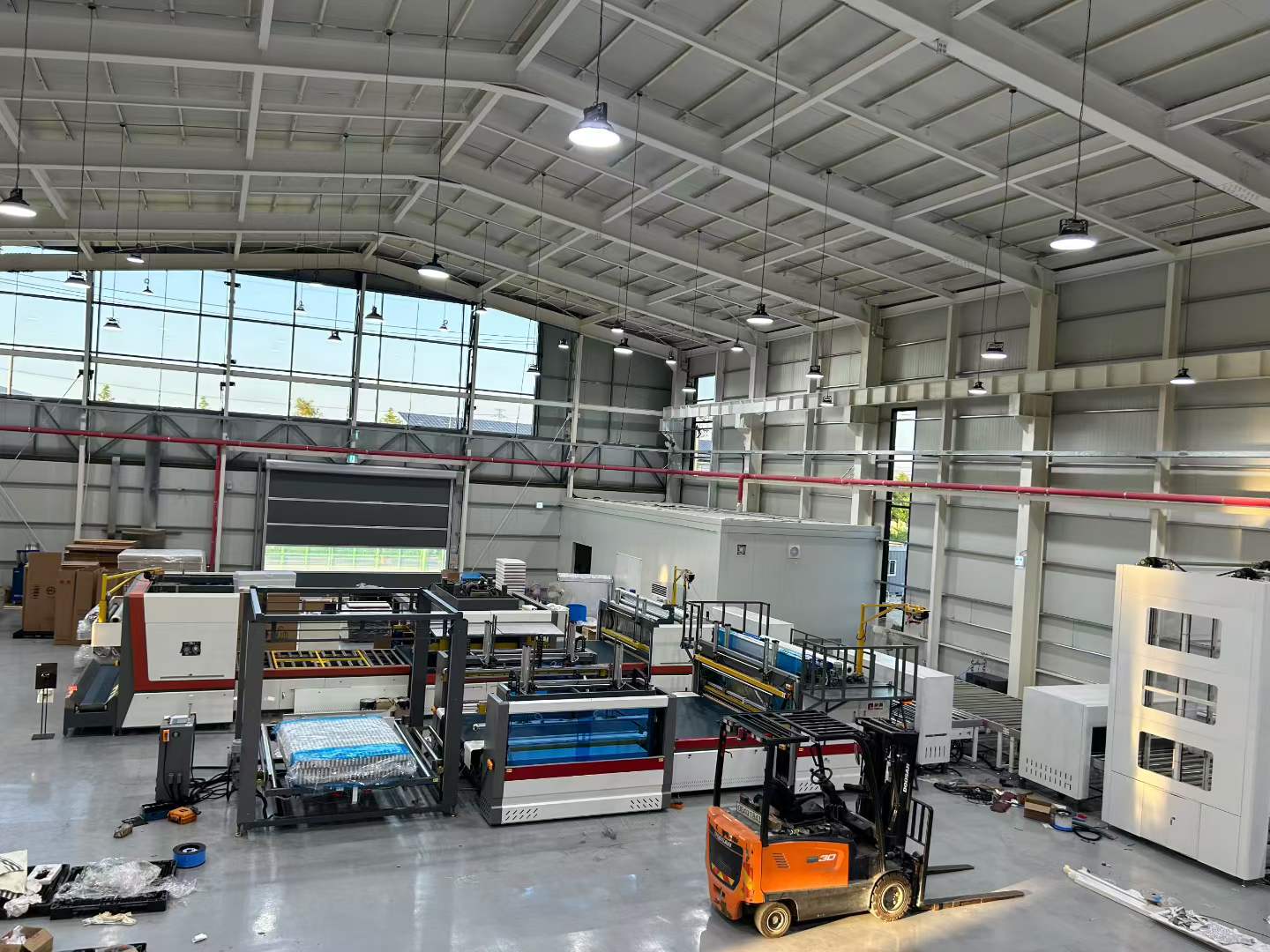
A smart mattress production line integrates multiple manufacturing processes and automated machines into a coordinated production workflow. Depending on the mattress type and factory requirements, a production line may include equipment for:
-
Spring production
-
Foam processing
-
Mattress assembly
-
Quilting
-
Tape edging
-
Compression
-
Rolling
-
Packing
-
Automatic material handling
The goal is not simply to automate individual machines. A well-designed production line connects different processes to create a more efficient and standardized manufacturing system.
Why Choosing the Right Production Line Matters
Every mattress factory has different production requirements. A line designed for a small factory may not be suitable for a high-volume manufacturer, while an oversized automated line can create unnecessary investment and maintenance costs.
The right production line can help manufacturers:
-
Increase production capacity
-
Reduce repetitive manual operations
-
Improve product consistency
-
Optimize labor utilization
-
Reduce production bottlenecks
-
Standardize manufacturing processes
-
Improve mattress packing efficiency
-
Prepare for future production growth
For this reason, manufacturers should evaluate the complete production process instead of selecting machines individually based only on specifications.
1. Define Your Mattress Types First
The first step is to identify exactly what mattresses your factory produces.
Common mattress categories include:
-
Innerspring mattresses
-
Pocket spring mattresses
-
Foam mattresses
-
Memory foam mattresses
-
Hybrid mattresses
-
Compressed mattresses
-
Rolled mattresses
Different mattress structures require different production and processing equipment. For example, a factory producing compressed foam mattresses may prioritize foam processing and compression packing equipment, while a spring mattress manufacturer may require automated spring production and assembly equipment.
Your production line should be designed around your actual product portfolio.
2. Determine Your Target Production Capacity
Production capacity is one of the most important factors when selecting a smart mattress production line.
Before contacting a machinery supplier, determine:
-
Current daily mattress production
-
Target future production
-
Number of working shifts
-
Working hours per shift
-
Peak production requirements
-
Expected production growth
For example, a factory producing 300 mattresses per day has very different automation requirements from a manufacturer targeting 2,000 mattresses per day.
Choosing equipment based on current demand alone may create capacity limitations later. At the same time, investing in excessive capacity can increase initial costs without delivering an immediate return.
A good production line should provide sufficient capacity while allowing reasonable room for future expansion.
3. Evaluate Your Factory Layout
Smart production lines require effective material flow.
Before installation, manufacturers should evaluate:
-
Available floor space
-
Ceiling height
-
Equipment positioning
-
Raw material storage
-
Finished mattress storage
-
Worker movement
-
Forklift routes
-
Electrical requirements
-
Material transportation paths
A production line with excellent technical specifications may still perform poorly if the factory layout creates unnecessary transportation or handling steps.
Machine suppliers should ideally provide a layout proposal based on the actual dimensions of the factory.
4. Consider the Level of Automation You Really Need
Not every factory needs a fully automatic production line.
Depending on production volume and budget, manufacturers may consider:
Semi-automatic production lines
Suitable for factories that want to reduce labor requirements while maintaining operator flexibility.
Automatic production lines
Suitable for manufacturers with higher production volumes and standardized product specifications.
Smart and integrated production lines
Suitable for factories seeking deeper automation, coordinated equipment operation, production monitoring, and future digital manufacturing upgrades.
The best solution is not necessarily the most automated one. It is the level of automation that delivers the best balance between investment, productivity, flexibility, and operating costs.
5. Check Machine Compatibility
A smart production line consists of multiple machines, so compatibility is critical.
Manufacturers should ask suppliers about:
-
Machine communication
-
Production speed matching
-
Material transfer
-
Control systems
-
Safety systems
-
Electrical specifications
-
Software compatibility
-
Future equipment integration
For example, if the production speed of one process is significantly higher than the next process, it may create a bottleneck or unnecessary accumulation of semi-finished mattresses.
A well-integrated line should maintain a balanced production flow.
6. Pay Attention to the Mattress Packing Process
Packing is an important part of the overall production line, especially for manufacturers selling mattresses through e-commerce and international distribution channels.
Modern mattress packing solutions may include:
-
Compression packing
-
Vacuum packing
-
Roll packing
-
Film wrapping
-
Sealing
-
Automatic bagging
A suitable mattress compression roll packing machine can significantly reduce the volume of mattresses during transportation and storage. This can be particularly valuable for manufacturers shipping mattresses internationally or operating bed-in-a-box businesses.
When evaluating the production line, manufacturers should consider packing capacity alongside manufacturing capacity.
7. Consider Film and Material Compatibility
The production line should also work effectively with the packing materials used by your factory.
Depending on the packing method, manufacturers may use different types of PE film, PVC film, or other suitable packing materials.
Important factors include:
-
Film width
-
Film thickness
-
Film strength
-
Film elasticity
-
Sealing performance
-
Compression requirements
-
Package dimensions
The correct combination of machine and film can help achieve stable compression, reliable sealing, and consistent package quality.
8. Evaluate Energy Consumption and Operating Costs
Initial machine price is only part of the investment.
Manufacturers should also consider:
-
Electricity consumption
-
Labor requirements
-
Film consumption
-
Maintenance costs
-
Spare parts
-
Production downtime
-
Training requirements
A machine with a higher initial price may provide better long-term value if it significantly reduces labor and material consumption.
Therefore, factories should compare the total cost of ownership, rather than focusing only on the purchase price.
9. Check Supplier Experience and Technical Support
The supplier's experience is particularly important when purchasing an integrated mattress production line.
Before making a decision, ask:
-
How many mattress factories have you supplied?
-
Can you provide similar project references?
-
Can you provide factory layout design?
-
Is installation support available?
-
Is operator training included?
-
How are spare parts supplied?
-
What after-sales service is available?
-
Can the system be expanded in the future?
A reliable supplier should be able to understand the entire production process rather than simply selling individual machines.
10. Plan for Future Expansion
A smart mattress production line should not only solve today's production problems. It should also support future growth.
For example, your factory may initially produce 500 mattresses per day but plan to increase production to 1,000 or more units later.
When selecting equipment, consider whether the system can support:
-
Additional machines
-
Higher production speeds
-
New mattress sizes
-
New mattress types
-
Automated material handling
-
More advanced packing systems
-
Production data management
Modular and scalable solutions can make future upgrades easier and reduce the need to completely replace the production line.
Smart Mattress Production Line Selection Checklist
Before choosing a supplier, mattress manufacturers should clearly define:
| Factor |
Questions to Ask |
| Mattress type |
What types of mattresses will be produced? |
| Production capacity |
How many mattresses are required per day? |
| Automation |
How much manual labor should be reduced? |
| Factory layout |
How much installation space is available? |
| Packing |
Will mattresses be flat packed, compressed, or roll packed? |
| Materials |
What foam, springs, fabric, and packing films are used? |
| Budget |
What is the total investment range? |
| Maintenance |
How easy are maintenance and spare parts supply? |
| Expansion |
Can the line be upgraded later? |
| Supplier support |
What installation and after-sales services are available? |
Why NAIGU for Smart Mattress Production Solutions?
NAIGU provides mattress machinery and packing solutions for manufacturers looking to improve production automation and efficiency. Based on mattress type, production capacity, factory layout, and packing requirements, a suitable combination of equipment can be developed for different manufacturing projects.
From mattress production equipment to mattress compression and packing machines, an integrated approach can help manufacturers build a more efficient production workflow.
Conclusion
Choosing the right smart mattress production line requires more than comparing machine prices. Manufacturers should evaluate mattress types, production capacity, factory layout, automation requirements, machine compatibility, packing methods, operating costs, supplier support, and future expansion.
The best production line is one that fits your factory's actual requirements while providing a practical path toward higher efficiency and automation.
For mattress manufacturers planning a new factory or upgrading an existing production line, working with an experienced machinery supplier from the beginning can help reduce investment risks and create a more reliable long-term manufacturing solution.
Looking for the right smart mattress production line for your factory? NAIGU provides integrated mattress machinery and packing solutions, including mattress production equipment, compression machines, and roll packing machines.
Share your mattress type, size, thickness, daily production capacity, and factory requirements with us. Our team can recommend a suitable production line configuration and provide a customized quotation.
Contact NAIGU today to discuss your mattress production project.


