Categories
How to Build an Automated Mattress Production Line |NAIGU
Building an automated mattress production line requires careful planning of production processes, equipment selection, factory layout, material flow, quality control, and packing. This article explains how mattress manufacturers can integrate automated equipment to increase production capacity, reduce manual handling, improve efficiency, and create a scalable manufacturing system.
Aug 26th,2026
64 Views
As mattress manufacturers face rising labor costs, increasing order volumes, and stronger competition in global markets, automation has become an important strategy for improving production efficiency. An automated mattress production line can connect multiple manufacturing processes, reduce manual handling, improve consistency, and create a more scalable factory workflow.
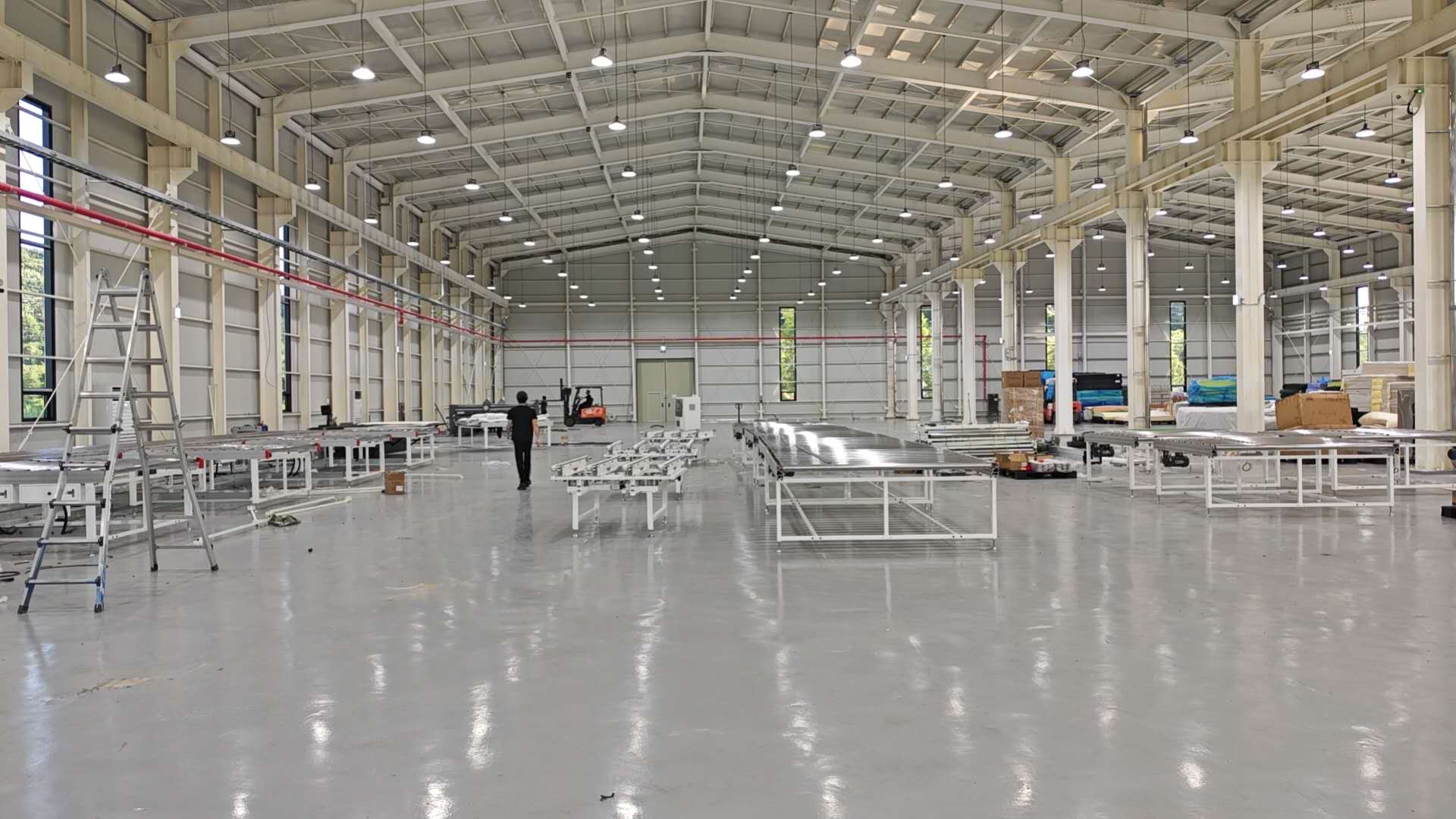
However, building an automated production line requires more than simply purchasing individual machines. Manufacturers need to consider mattress types, production capacity, factory layout, automation level, material flow, quality control, and end-of-line packing.
1. Define Your Mattress Production Requirements
The first step is to clearly define what your factory needs to produce.
Before selecting equipment, manufacturers should determine:
-
Mattress types
-
Mattress sizes
-
Mattress thickness range
-
Daily production capacity
-
Target automation level
-
Product specifications
-
Available factory space
-
Target export markets
For example, a factory producing foam mattresses may require a different production configuration from a manufacturer specializing in spring or hybrid mattresses.
Clearly defining these requirements helps suppliers design a suitable production line rather than offering a standard solution that may not match the factory's needs.
2. Choose the Right Mattress Production Process
Different mattress types require different manufacturing processes.
A typical spring mattress production workflow may include:
Spring Production → Spring Assembly → Foam/Fabric Preparation → Quilting → Mattress Assembly → Tape Edging → Inspection → Packing
For foam mattresses, the process may focus more on foam cutting, layering, gluing, assembly, compression, and packing.
Manufacturers should map the entire production process before deciding which stages should be automated.
3. Automate High-Labor Processes First
Not every production stage needs to be fully automated from the beginning.
Manufacturers can prioritize processes that require significant manual labor or frequently create production bottlenecks.
Common areas for automation include:
-
Spring production
-
Mattress assembly
-
Tape edging
-
Material handling
-
Mattress compression
-
Film packing
-
Roll packing
-
Conveying
This allows factories to achieve meaningful efficiency improvements while controlling the initial investment.
4. Build a Connected Production Workflow
A smart mattress factory should not operate every machine as an isolated workstation.
Instead, equipment should be arranged to create a smooth material flow.
A typical automated workflow could be:
Raw Materials → Mattress Production → Assembly → Tape Edging → Inspection → Compression → Packing → Rolling → Warehouse
Connecting different processes can reduce unnecessary movement and waiting time.
This is especially important for high-volume factories where small delays at one stage can affect the entire production line.
5. Select the Appropriate Mattress Production Equipment
The equipment configuration depends on the mattress manufacturing process.
Depending on the product, an automated mattress factory may require:
-
Spring machines
-
Pocket spring production equipment
-
Quilting machines
-
Foam processing equipment
-
Mattress assembly machines
-
Tape edge machines
-
Mattress turning equipment
-
Compression packing machines
-
Roll packing machines
-
Conveyors
Manufacturers should select equipment based on required output rather than simply choosing the highest level of automation.
6. Consider Production Capacity
Production capacity is one of the most important factors when designing an automated mattress production line.
For example, if the factory produces 500 mattresses per day, each production stage should have sufficient capacity to support this output.
If one process is significantly slower than the others, it can become a bottleneck.
Manufacturers should therefore evaluate:
Production Capacity = Output per Hour × Operating Hours × Production Efficiency
Actual capacity should also account for product changes, maintenance, material supply, and machine downtime.
7. Optimize Factory Layout
A good machine layout can significantly improve production efficiency.
When designing the factory, manufacturers should consider:
-
Raw material storage
-
Machine locations
-
Product movement
-
Worker access
-
Inspection areas
-
Packing areas
-
Finished product storage
-
Shipping areas
The goal is to minimize unnecessary transportation and create a logical one-way production flow.
For large mattress factories, professional factory layout planning can help maximize available floor space.
8. Integrate Automated Mattress Packing
Packing should be considered part of the production line rather than an independent final step.
A modern mattress compression packing machine can automate several operations, depending on the configuration:
Feeding → Compression → PE Film Packing → Sealing → Folding/Rolling → Finished Package
Compression roll packing can reduce mattress volume and improve warehouse and transportation efficiency.
For export-oriented manufacturers, compact packing can also help improve container utilization and reduce logistics costs.
9. Select the Right Packing Film
Packing film is an important part of an automated mattress packing system.
Manufacturers should consider:
-
Film material
-
Film thickness
-
Film width
-
Tensile strength
-
Puncture resistance
-
Sealing performance
-
Compression requirements
The correct film specification depends on the mattress construction and machine configuration.
Using unsuitable film may cause film breakage, poor sealing, or unstable finished packages.
10. Add Quality Control Points
Automation should not mean removing quality control.
Quality inspection should be integrated into different stages of the production line.
Possible inspection points include:
-
Raw material inspection
-
Spring quality
-
Foam dimensions
-
Mattress assembly
-
Tape edge quality
-
Final mattress dimensions
-
Compression performance
-
Packing quality
Early quality checks can help identify problems before defective products reach the final packing stage.
11. Use Automation to Reduce Manual Handling
Mattresses are large products, so unnecessary manual handling can consume significant labor and floor space.
Automated conveyors and handling systems can connect different production stages and reduce repetitive movement.
This can help operators focus on:
-
Machine operation
-
Quality control
-
Production monitoring
-
Material management
-
Maintenance
The result is a more efficient allocation of factory labor.
12. Prepare Operators and Maintenance Teams
Even a highly automated production line requires trained employees.
Operators should understand:
-
Machine operation
-
Safety procedures
-
Basic troubleshooting
-
Material requirements
-
Quality standards
-
Routine maintenance
Maintenance teams should also receive appropriate technical training so that common machine problems can be addressed quickly.
Well-trained personnel are essential for maintaining stable production and reducing downtime.
13. Monitor Production Performance
Modern automated factories can collect useful production data.
Manufacturers can monitor:
-
Production output
-
Machine utilization
-
Downtime
-
Production cycle time
-
Material consumption
-
Packing efficiency
-
Defect rates
This information helps factory managers identify bottlenecks and improve production planning.
For example, if the production line can manufacture mattresses faster than the packing section can process them, upgrading the packing capacity may provide a greater benefit than increasing upstream production.
14. Plan for Future Expansion
An automated mattress production line should not only meet today's requirements.
Manufacturers should consider expected business growth over the next several years.
A scalable system can allow factories to gradually add:
-
Additional production machines
-
Automated conveyors
-
Higher-capacity packing equipment
-
Additional mattress production lines
-
Warehouse automation
This approach can reduce the need for major factory redesigns as production volumes increase.
15. Calculate the Total Investment
The cost of an automated mattress production line includes more than machine prices.
Manufacturers should consider:
Total Investment = Equipment + Installation + Factory Preparation + Training + Maintenance + Energy + Packing Materials
At the same time, potential benefits may include:
-
Lower labor costs
-
Higher production capacity
-
Reduced packing costs
-
Better material utilization
-
Lower logistics costs
-
Improved product consistency
The most suitable solution is therefore the one that provides the best long-term production value rather than simply the lowest purchase price.
Conclusion
Building an automated mattress production line requires careful planning from production processes and equipment selection to factory layout, quality control, packing, and future expansion.
A well-designed system can connect mattress manufacturing, inspection, compression, packing, and logistics into a more efficient workflow. For manufacturers targeting high-volume production and international markets, automation can improve productivity while reducing manual handling and operating costs.
NAIGU provides mattress production lines, mattress making machines, mattress packing machines, and compression roll packing solutions for manufacturers worldwide. By evaluating your mattress specifications, production capacity, factory space, and automation goals, NAIGU can help develop a suitable production solution.
Planning to build or upgrade an automated mattress factory? Contact NAIGU to discuss your production requirements and get a customized solution.


