Categories
How Mattress Tape Edge Machines Fit into a Complete Production Line |NAIGU
Learn how mattress tape edge machines connect mattress assembly, edge finishing, quality inspection, and final packing. Explore equipment selection and production line planning.
Nov 19th,2026
2 Views
A mattress production line consists of multiple processes, from raw material preparation and component manufacturing to mattress assembly, edge finishing, inspection, and final packing.
Among these processes, tape edge sewing plays an important role in completing the mattress structure. A mattress tape edge machine joins the top and bottom panels with the side border, creating a finished edge and helping maintain a consistent mattress appearance.
For mattress manufacturers planning a new factory or upgrading an existing production line, understanding how tape edge machines fit into the complete manufacturing workflow is essential.
This article explains the role of tape edge machines, their connection with other production processes, and how to select suitable equipment for different factory requirements.
1. Understand the Main Stages of Mattress Production
Before selecting a tape edge machine, manufacturers should understand the complete mattress manufacturing process.
A typical mattress production line may include the following stages:
-
Raw material preparation
-
Foam cutting and processing
-
Pocket spring or spring unit production
-
Fabric quilting and panel preparation
-
Mattress core assembly
-
Tape edge sewing
-
Final inspection
-
Compression and roll packing
The exact configuration depends on the mattress type and manufacturing method.
For example, foam mattress factories may focus on foam cutting, bonding, and assembly equipment. Spring mattress manufacturers may require additional spring production and assembly machinery. Hybrid mattress production combines different components and may involve more complex assembly processes.
Tape edge sewing is generally positioned after the mattress core and cover components have been prepared and assembled.
2. What Does a Mattress Tape Edge Machine Do?
A mattress tape edge machine is used to sew the border tape around the perimeter of a mattress, joining the top and bottom panels with the side border.
This process helps create:
-
Consistent mattress edge finishing
-
Secure seams around the mattress perimeter
-
A neat and professional appearance
-
Improved production consistency
-
Reduced dependence on manual sewing work
The tape edge process is especially important for mattresses with fabric covers and finished side borders.
The quality of this operation affects the appearance of the final mattress and the consistency of the finished product.
3. Position the Tape Edge Machine After Mattress Assembly
In a complete production line, tape edge sewing normally takes place after the mattress core and related cover components have been prepared.
A simplified workflow is:
Mattress Core Preparation → Panel and Border Preparation → Mattress Assembly → Tape Edge Sewing → Quality Inspection → Final Packing
At this stage, the mattress is ready for perimeter sewing.
The tape edge machine completes the edge-finishing operation before the product moves to inspection and packing.
To maintain smooth production flow, manufacturers should ensure that mattresses can be transferred efficiently between the assembly station and the tape edge workstation.
Adequate space should also be reserved for loading, unloading, turning, and handling mattresses during sewing.
4. Match Tape Edge Machine Capacity with Upstream Production
One common mistake when planning a mattress production line is selecting equipment based only on individual machine specifications.
A tape edge machine must be able to support the output of the preceding assembly process.
For example, if the mattress assembly section produces 30 mattresses per hour but the tape edge section can only process 18 mattresses per hour under actual operating conditions, unfinished mattresses may accumulate before the sewing station.
To avoid this problem, manufacturers should evaluate:
-
Target daily mattress output
-
Average tape edge processing time
-
Mattress sizes and thicknesses
-
Operator experience
-
Machine setup and adjustment time
-
Product changeover frequency
-
Available working hours
The actual processing capacity should be confirmed using the factory's mattress specifications and expected production conditions.
The goal is to coordinate the capacity of the tape edge process with the overall production line rather than maximizing the speed of one machine.
5. Choose Between Semi-Automatic and Automatic Tape Edge Machines
Different mattress factories have different production volumes, labor arrangements, and automation requirements.
Selecting the right tape edge machine depends on these operating conditions.
Semi-Automatic Mattress Tape Edge Machine
A semi-automatic machine may be suitable for factories with moderate production requirements or manufacturers who are gradually upgrading their equipment.
It can help improve sewing consistency while maintaining operator involvement in product handling and machine operation.
Automatic Mattress Tape Edge Machine
An automatic tape edge machine is worth considering for factories seeking higher automation and more consistent production workflows.
It can help reduce manual operating requirements and support more standardized mattress edge finishing.
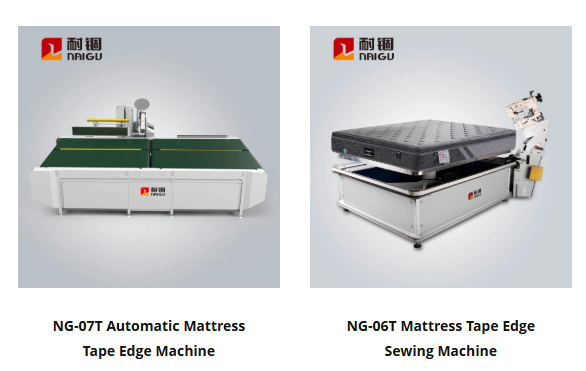
NAIGU offers two tape edge machine options:
-
NG-06T Semi-Automatic Mattress Tape Edge Machine: Designed for factories looking for a semi-automatic tape edge solution.
-
NG-07T Automatic Mattress Tape Edge Machine: Designed for manufacturers seeking a higher level of automation in the tape edge process.
The final selection should consider mattress specifications, production targets, available labor, and the factory's investment plan.
6. Coordinate Tape Edge Sewing with Quality Inspection
After tape edge sewing, mattresses should move to a quality inspection station before final packing.
Inspection helps manufacturers identify sewing problems and maintain consistent product quality.
Typical inspection points include:
-
Seam consistency
-
Edge tape alignment
-
Corner finishing
-
Fabric condition
-
Overall mattress appearance
-
Product dimensions
Any defects should be identified and handled before the mattress enters the packing process.
A clearly defined inspection procedure can help reduce rework and improve consistency across different mattress models.
7. Connect the Tape Edge Process with Final Packing
After inspection, finished mattresses can move to the packing section.
Depending on the factory's product range and shipping requirements, packing may involve:
-
Flat mattress packing
-
Compression packing
-
Compression and roll packing
-
Folding and roll packing for compatible products
For manufacturers producing mattresses for online retail, export, or space-efficient transportation, compression roll packing can be an important part of the production line.
Tape edge sewing and packing should be planned together to avoid unnecessary waiting time between the two processes.
However, packing equipment must be selected according to mattress construction, dimensions, thickness, and compression requirements.
8. Plan the Factory Layout for Smooth Material Flow
The position of the tape edge machine can affect the efficiency of the entire mattress production line.
When planning the layout, manufacturers should consider:
-
Distance between mattress assembly and tape edge sewing
-
Space for mattress loading and unloading
-
Operator movement and working areas
-
Mattress transfer routes
-
Access to electrical connections
-
Space for inspection and temporary storage
-
Connection with downstream packing equipment
A well-organized layout helps reduce unnecessary handling and makes production scheduling easier.
For factories with limited floor space, the equipment supplier should evaluate the available dimensions before recommending a machine configuration.
9. Evaluate the Complete Production Line Before Investing
A tape edge machine should not be selected in isolation when planning a new mattress factory.
Manufacturers should evaluate how the equipment fits into their complete production requirements.
Before requesting a quotation, prepare the following information:
-
Mattress types and construction
-
Mattress length, width, and thickness
-
Daily or monthly production targets
-
Existing production equipment
-
Required automation level
-
Available factory space
-
Current tape edge sewing method
-
Final packing requirements
With these details, a machinery manufacturer can evaluate the production workflow and recommend suitable equipment.
NAIGU provides mattress manufacturing and packing machinery solutions, including semi-automatic and automatic tape edge machines, mattress production equipment, and compression roll packing systems.
Whether you are establishing a new mattress factory or upgrading an existing production line, choosing the right tape edge equipment can help improve edge-finishing consistency and support a more coordinated manufacturing process.
Contact NAIGU to discuss your mattress production requirements and equipment configuration.
Frequently Asked Questions
1. Where is a tape edge machine installed in a mattress production line?
It is generally installed after mattress core assembly and panel preparation, and before final quality inspection and packing.
2. What is the difference between a semi-automatic and an automatic tape edge machine?
A semi-automatic machine involves more operator participation, while an automatic model provides a higher level of automation. The right option depends on production volume, labor arrangements, and factory requirements.
3. Does every mattress factory need a tape edge machine?
Not every mattress uses the same edge-finishing method. However, factories producing mattresses with perimeter tape edging generally need suitable tape edge sewing equipment.
4. How can manufacturers prevent bottlenecks at the tape edge station?
They should evaluate actual processing time, mattress specifications, operator availability, and upstream assembly output. Equipment capacity should be coordinated with the entire production workflow.
5. Can a tape edge machine be added to an existing mattress production line?
Yes, in many cases. Manufacturers should first evaluate available space, product transfer routes, existing equipment capacity, and electrical requirements.
6. What information is needed to choose a suitable tape edge machine?
Important details include mattress dimensions, thickness, construction, daily output, current sewing process, and required automation level.


