Categories
How Bed-in-a-Box Brands Benefit from Compression Technology |NAIGU
Compression technology plays a key role in the bed-in-a-box mattress business by reducing mattress volume and improving packing, storage, transportation, and delivery efficiency. This article explains how mattress compression and roll-packing solutions can help bed-in-a-box brands optimize logistics, increase production efficiency, improve packing consistency, and support scalable e-commerce operations.
Aug 13th,2026
67 Views
The bed-in-a-box business model has changed the way mattresses are manufactured, packed, stored, shipped, and delivered. Instead of selling mattresses in their original full-size form, brands compress, roll, and pack mattresses into compact packages that can be transported directly to customers.
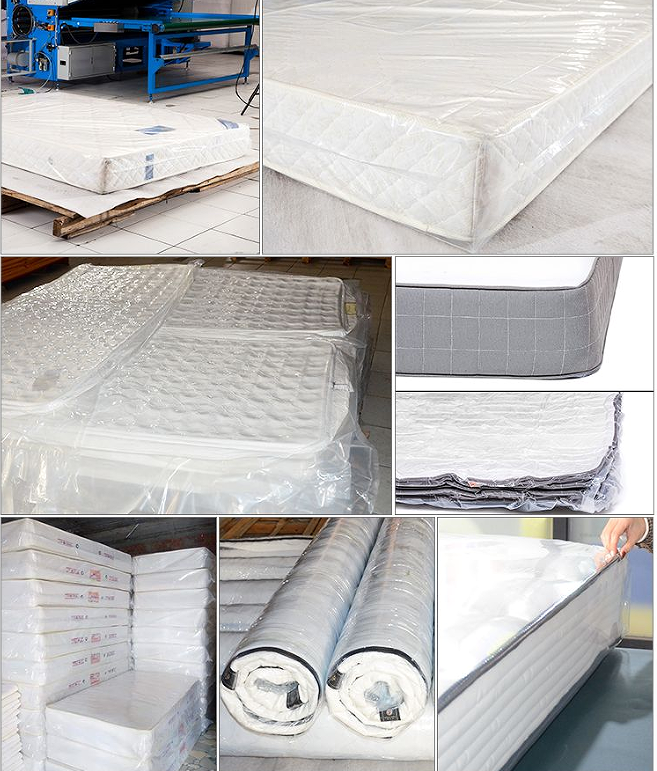
At the center of this process is mattress compression technology. By reducing mattress volume before packing, compression systems can help bed-in-a-box brands improve logistics efficiency, simplify handling, and create a more convenient delivery experience.
What Is Bed-in-a-Box Compression Technology?
Bed-in-a-box compression technology uses specialized equipment to compress a mattress and reduce its overall volume before it is sealed and packed.
Depending on the mattress construction and production requirements, the process may include:
-
Mattress inspection
-
Compression
-
Folding or rolling
-
Film packing
-
Sealing
-
Final packing and labeling
The finished mattress can then be transported in a compact format and expanded by the customer after unpacking.
Compression technology is commonly used for foam, hybrid, and other mattresses designed for roll packing, although the appropriate compression method depends on the mattress structure.
1. More Efficient Transportation
One of the biggest advantages of mattress compression is volume reduction.
A traditional mattress occupies a large amount of space during transportation. Compressing and roll packing the mattress can significantly reduce its packed size, allowing manufacturers and bed-in-a-box brands to make better use of available transportation and warehouse space.
This can be particularly valuable for e-commerce mattress brands that ship products directly to customers.
For international exporters, compact packing can also simplify container loading and logistics planning.
2. Lower Logistics Costs
Transportation costs are strongly influenced by shipment volume and handling requirements.
When mattresses are compressed into smaller packages, brands may be able to transport more units within a given storage or shipping capacity. This can improve logistics efficiency and potentially reduce the transportation cost per mattress.
However, actual savings depend on several factors, including:
-
Mattress dimensions
-
Compression ratio
-
Final roll diameter
-
Packaging material
-
Container dimensions
-
Shipping method
-
Destination
For this reason, brands should evaluate compression performance together with their actual logistics data rather than relying only on theoretical volume reduction.
3. Easier E-Commerce Delivery
The bed-in-a-box concept is closely connected to online mattress sales.
A compressed mattress can be packed into a manageable box or roll, making it easier to move through warehouses and distribution networks. Compared with transporting a full-size mattress, compact packing can simplify handling at multiple stages of delivery.
This is particularly useful for direct-to-consumer brands that need to deliver mattresses to residential addresses.
A smaller package can also make it easier for customers to move the mattress from the delivery location to the bedroom.
4. Improved Warehouse Utilization
Warehouse space is an important cost for mattress brands.
Large, unpacked mattresses require considerable floor and vertical storage space. Compression and roll packing can reduce the volume occupied by each mattress, allowing manufacturers and distributors to organize inventory more efficiently.
Better space utilization can help brands manage growing product inventories without immediately requiring additional warehouse capacity.
5. More Consistent Packing Quality
Manual compression and packing can result in variations between operators.
Automated mattress compression machines can help standardize important production parameters, such as compression pressure, packing dimensions, and operating sequences.
Consistent packing is particularly important for bed-in-a-box brands because products may be shipped in large quantities to customers across different regions.
Stable packing dimensions can also make warehouse organization, labeling, palletizing, and transportation planning easier.
6. Supports Scalable Mattress Production
As a bed-in-a-box brand grows, production volume usually increases.
Manual packing processes may become a bottleneck when manufacturers need to process hundreds or thousands of mattresses. Automated compression and roll-packing equipment can help increase production capacity while reducing repetitive manual operations.
For growing mattress manufacturers, automation can support a more scalable production process.
The right equipment depends on factors such as mattress construction, daily production volume, mattress size range, and required packing speed.
7. Better Integration with Mattress Production Lines
Compression technology does not have to operate as an isolated process.
For larger mattress factories, compression and roll-packing equipment can be integrated with other production and material-handling systems.
A typical production flow may include:
Mattress Production → Inspection → Compression → Roll Packing → Sealing → Labeling → Storage → Shipping
Integrating these processes can reduce unnecessary handling and create a more continuous production workflow.
8. Film Selection Is Also Important
Compression equipment and packing film work together.
A suitable mattress packing film needs to provide sufficient strength and flexibility for the compression and roll-packing process. Film thickness, width, material structure, sealing performance, and puncture resistance can all influence packing results.
Common film considerations include:
-
PE film specifications
-
Film thickness
-
Film width
-
Tensile strength
-
Puncture resistance
-
Sealing performance
-
Roll length
-
Compatibility with the packing machine
Using a film that matches the machine and mattress application can help maintain stable production performance.
9. Helps Create a Convenient Customer Experience
The bed-in-a-box model is not only about manufacturing efficiency. It is also about creating a convenient purchasing and delivery experience.
A mattress that arrives in a compact package is generally easier for consumers to carry into their homes than a full-size mattress.
After opening the package, the mattress can gradually return toward its intended shape. The recovery characteristics depend on the mattress materials, construction, compression method, storage time, and manufacturer's specifications.
For this reason, mattress brands should validate compression and recovery performance carefully before selecting equipment and defining customer instructions.
What Should Bed-in-a-Box Brands Consider When Choosing Compression Equipment?
Before purchasing a mattress compression machine, manufacturers should provide detailed product and production information.
Important factors include:
Mattress Dimensions
The machine should accommodate the full range of mattress widths, lengths, and thicknesses produced by the factory.
Mattress Construction
Foam, spring, hybrid, and specialty mattresses can behave differently during compression. The machine configuration should therefore be matched to the mattress structure.
Target Roll Diameter
The desired finished roll diameter affects equipment selection, compression parameters, film requirements, and logistics planning.
Production Capacity
Brands should estimate daily and hourly production requirements to determine whether a semi-automatic or fully automatic system is appropriate.
Film Specifications
The packing film should be selected according to the compression process and final packing requirements.
Factory Layout
Available floor space, material flow, electrical requirements, and integration with existing production equipment should also be considered.
Compression Technology Is Becoming More Important for Mattress E-Commerce
The continued growth of online mattress sales has increased the importance of efficient compression and packing solutions.
For bed-in-a-box brands, compression technology can contribute to several areas of the business:
-
More efficient transportation
-
Better warehouse utilization
-
Easier product handling
-
More consistent packing
-
Higher production efficiency
-
Scalable manufacturing
-
More convenient residential delivery
However, compression should be treated as part of the complete mattress supply chain rather than as a standalone machine process.
The best solution combines mattress construction, compression performance, packing film, machine configuration, logistics requirements, and production capacity.
Conclusion
Compression technology is a key part of the modern bed-in-a-box business model. By reducing mattress volume and automating the packing process, mattress manufacturers can create a more efficient path from factory production to final customer delivery.
For brands planning to expand their online mattress business or enter new export markets, investing in the right mattress compression and roll-packing equipment can provide important operational advantages.
The ideal solution should be selected according to the brand's mattress specifications, production volume, target roll size, packing film, and logistics requirements.
If you are looking for a suitable compression packing machine, send us your mattress size, thickness, construction, production capacity, and target roll diameter. Our team can recommend a suitable solution and provide technical specifications and a quotation.
NAIGU — Mattress Packing Solutions for Global Manufacturers.


