
With rising energy costs and increasing environmental requirements in global markets, mattress manufacturers are under pressure to reduce energy consumption while maintaining stable output and product quality. Improving energy efficiency in mattress production lines has become an important strategy for cost control, sustainability, and export competitiveness.
This article explores practical energy-saving measures that can be implemented in modern mattress production lines.
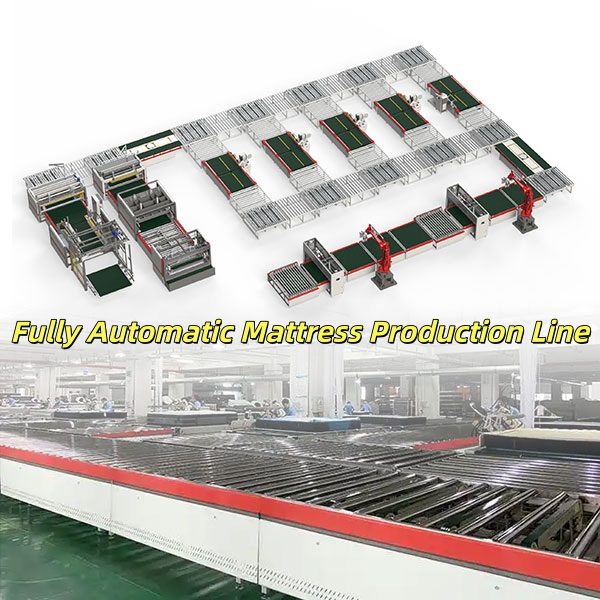
Before implementing energy-saving solutions, manufacturers should analyze where energy is consumed most:
Foam cutting and shaping machines
Mattress gluing and curing processes
Compression and roll packing systems
Air compressors and vacuum systems
Material handling and transfer equipment
Targeting these areas delivers the most immediate efficiency gains.
Modern mattress machines are designed to reduce power consumption without sacrificing performance.
Key improvements include:
High-efficiency motors and drives
Optimized heating and adhesive application systems
Intelligent standby modes during idle periods
Replacing outdated equipment with energy-efficient models significantly lowers long-term energy costs.
Automation not only improves productivity but also supports energy optimization.
Automated systems:
Synchronize machine operation to avoid unnecessary running
Reduce repeated start-stop energy loss
Maintain stable operating parameters
An integrated mattress production line consumes less energy per unit compared to isolated machines.
Packing plays a major role in overall energy efficiency, especially for export factories.
Mattress compression packing machines
Mattress roll packing machines
Optimized vacuum and sealing systems
Benefits:
Reduced vacuum cycle time
Lower electricity usage per mattress
Significant reduction in shipping energy and cost due to volume compression
Efficient packing delivers both energy and logistics savings.
Air compressors and vacuum pumps often account for a large portion of energy consumption.
Energy-saving measures include:
Variable-frequency drive (VFD) compressors
Leak detection and maintenance programs
Centralized vacuum systems instead of multiple small units
These upgrades improve system efficiency and reduce wasted energy.
A well-designed factory layout supports energy efficiency by:
Shortening material transport distance
Reducing conveyor and forklift usage
Improving process flow continuity
Less movement means less energy consumption per mattress produced.
Regular maintenance ensures machines operate at optimal efficiency:
Clean cutting and gluing components
Proper lubrication of moving parts
Monitoring energy consumption per machine
Energy monitoring systems help identify inefficiencies and support continuous improvement.
Improved energy efficiency leads to:
Lower production cost per unit
Better compliance with international environmental standards
Stronger brand image in export markets
For many buyers, sustainable manufacturing is becoming a key selection criterion.
📧 Email: jenney@gdnaimei.com
📱 WhatsApp/Phone: +86 13924835577
🌐 Website: https://naigumattressmachine.com

