
The mattress industry is undergoing a profound transformation. Gone are the days of purely manual, labor-intensive assembly lines. Today, forward-thinking manufacturers are leveraging smart control systems to create highly efficient, precise, and responsive "smart factories." This technological evolution is not just a minor upgrade; it's a complete overhaul of production paradigms, leading to superior products, reduced waste, and a stronger competitive edge.
This article explores the key applications of smart control systems in mattress production lines and how they are setting new standards for the industry.
Precision is paramount in mattress production, starting with the cutting of fabrics, foams, and other materials.
Application: Smart CNC (Computer Numerical Control) cutting machines are integrated with advanced control software. Operators input design specifications digitally, and the system automatically executes cuts with laser-like accuracy.
Benefits:
Minimized Material Waste: Optimized nesting software ensures material is used in the most efficient layout possible, significantly reducing scrap.
Unmatched Consistency: Every cut is identical, eliminating human error and ensuring every mattress component meets exact specifications.
Increased Speed: Automated cutting is vastly faster than manual methods, accelerating the entire production process.
The quilting process, where the top fabric is joined with the cushioning layers, is a complex operation that benefits immensely from smart controls.
Application: Computer-controlled, multi-needle quilting machines use smart systems to manage stitch patterns, thread tension, and fabric feeding automatically. Designs can be changed instantly with a digital file upload.
Benefits:
Design Flexibility: Manufacturers can offer a wide array of intricate patterns and custom designs without retooling.
Enhanced Quality: Consistent stitch length and perfect tension prevent issues like puckering or loose threads.
Reduced Downtime: Quick changeover between designs means the production line can be more responsive to custom orders.
For memory foam and polyurethane mattresses, the chemical reaction and curing process are critical to the final product's feel and performance.
Application: Smart control systems precisely manage the ratio, temperature, and flow of chemical components into the mixing head. In the curing oven, IoT sensors and PLCs (Programmable Logic Controllers) maintain a perfectly consistent temperature and environment.
Benefits:
Superior Product Consistency: Every batch of foam has identical density, firmness, and cell structure.
Optimized Chemical Usage: Precise control prevents over-pouring and waste of raw materials.
Energy Efficiency: Smart ovens optimize heating cycles, reducing energy consumption.
Catching defects early is crucial for maintaining high-quality standards and reducing costly rework.
Application: High-resolution camera vision systems are installed at critical points on the line. These systems are connected to a central control unit programmed with AI algorithms to identify defects.
Benefits:
Automatic Defect Detection: The system can instantly spot issues like fabric stains, misaligned patterns, inconsistent stitching, or dimensional inaccuracies.
Data-Driven Insights: Defect data is logged and analyzed to identify recurring problems in the production process, enabling proactive corrections.
100% Inspection: Unlike sporadic manual checks, automated vision systems can inspect every single unit.
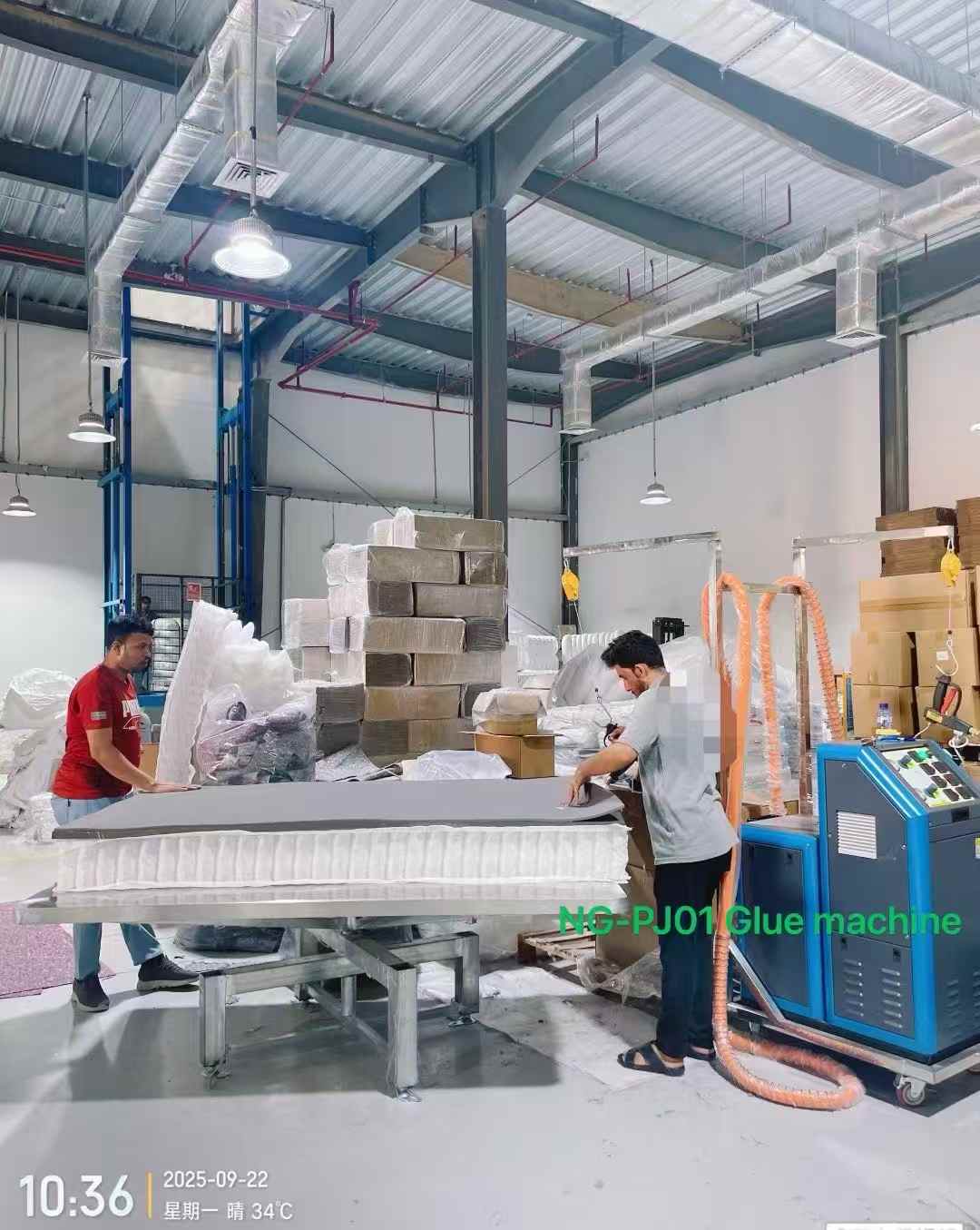
The final assembly—placing springs, aligning layers, and glueing—is being revolutionized by robotics.
Application: Robotic arms equipped with sophisticated sensors and guided by smart control systems can handle tasks like picking and placing pocketed spring units, applying adhesive, and stacking foam layers.
Benefits:
Labor Optimization: Frees human workers from strenuous, repetitive tasks, allowing them to focus on supervision and more complex quality checks.
Unwavering Precision: Robots ensure perfect alignment of core components, which is vital for the mattress's durability and comfort.
Increased Throughput: Robots work tirelessly at a constant, high speed.
The true power of smart control systems lies in their connectivity. An Industrial Internet of Things (IIoT) platform acts as the central nervous system for the entire production line.
Application: Sensors on every machine—from cutters and quilters to ovens and robots—feed real-time data (e.g., operating speed, temperature, error codes) to a central dashboard.
Benefits:
Predictive Maintenance: The system analyzes machine data to predict failures before they happen, scheduling maintenance to avoid unplanned downtime.
Overall Equipment Effectiveness (OEE) Tracking: Managers can monitor the line's performance in real-time, identifying bottlenecks and optimizing workflow.
End-to-End Traceability: Each mattress can be tracked through every production stage, creating a digital twin for quality assurance and customer transparency.
Integrating smart control systems is no longer a luxury for mattress manufacturers; it's a strategic necessity for staying competitive. The applications—from automated cutting and AI-powered quality control to a fully connected IIoT ecosystem—deliver tangible benefits:
Higher Quality Products
Mass Customization Capabilities
Reduced Operational Costs
Enhanced Manufacturing Agility
📧 Email: jenney@gdnaimei.com
📱 WhatsApp/Phone: +86 13924835577
🌐 Website: https://naigumattressmachine.com

