Categories
Best Foam Compression Packing Solutions for Export |NAIGU
Best Foam Compression Packing Solutions for Export explores how foam compression and roll packing can help manufacturers reduce package volume, optimize container space, save warehouse space, and improve export logistics efficiency. The guide covers foam compression machines, packing film selection, automation, and key factors to consider when choosing the right foam packing solution for international shipping.
Aug 20th,2026
65 Views
For foam manufacturers and furniture exporters, packing is an important part of international logistics. Foam products are lightweight but often bulky, which means they can occupy significant warehouse and container space. For export-oriented factories, foam compression packing can help reduce product volume, improve loading efficiency, and create a more standardized packing process.
Choosing the right foam compression packing solution depends on foam type, product dimensions, compression requirements, production capacity, and destination market. This guide explains the key factors exporters should consider when selecting foam compression packing equipment.
Why Foam Compression Matters for Export
Foam products can take up considerable space even when their actual weight is relatively low. When shipping internationally, this can result in inefficient container utilization and higher transportation costs.
Foam compression can help manufacturers:
-
Reduce foam package volume
-
Improve container utilization
-
Save warehouse space
-
Reduce manual handling
-
Improve packing consistency
-
Protect products during transportation
-
Increase the number of units shipped per container
For manufacturers exporting mattresses, sofa cushions, foam sheets, and other flexible foam products, compression can become an important part of an efficient export packing strategy.
What Is Foam Compression Packing?
Foam compression packing uses mechanical pressure to reduce the volume of flexible foam products before they are sealed or wrapped with packing materials.
A typical process may include:
Foam Product → Compression → Film/Bags → Sealing → Compact Package → Export Shipping
Depending on the product, the packing process may use PE film, plastic bags, or other suitable packing materials.
The required compression method depends on the foam's density, thickness, dimensions, elasticity, and recovery characteristics.
1. Foam Compression Roll Packing
For suitable foam products, compression roll packing is an efficient option for export manufacturers.
The machine compresses the foam and forms it into a compact roll package. Compared with large flat foam products, rolled packages are easier to handle and can occupy less storage and shipping space.
Potential advantages include:
-
Smaller package volume
-
Easier loading
-
More efficient warehouse storage
-
Reduced manual handling
-
Improved transportation efficiency
This solution is particularly useful for foam products that can tolerate compression and rolling without affecting their final performance.
2. Vacuum Compression Packing
Vacuum compression packing removes air from the package while compressing the foam.
This method can produce a compact package and is commonly considered for products such as foam mattresses, cushions, and other flexible foam items.
When choosing vacuum packing equipment, manufacturers should evaluate:
-
Vacuum performance
-
Sealing quality
-
Film strength
-
Foam recovery
-
Package dimensions
-
Required production speed
The packing material must be strong enough to withstand compression and transportation conditions.
3. Foam Compression with PE Film Packing
PE film is commonly used for various industrial packing applications because of its flexibility and strength.
For foam compression applications, manufacturers should consider:
-
Film thickness
-
Film width
-
Tensile strength
-
Puncture resistance
-
Sealing performance
-
Film elasticity
-
Transparency requirements
The correct film specification should match the compression level and product characteristics.
Using film that is too thin may increase the risk of breakage, while unnecessarily thick film can increase material costs.
4. Automatic Foam Compression Packing
For high-volume exporters, automation can improve packing efficiency and reduce repetitive manual work.
An automated foam packing solution can integrate multiple operations, such as:
-
Product positioning
-
Compression
-
Film feeding
-
Sealing
-
Cutting
-
Rolling
-
Package handling
This can help manufacturers create a more standardized production workflow.
Automation is especially valuable when factories need to process large quantities of foam products every day.
5. Foam Compression for Mattress Export
Foam mattresses are one of the most common applications for compression packing.
Mattresses can be bulky and difficult to transport in their original form. Compression and roll packing can significantly reduce package volume for suitable foam mattress products.
A mattress compression roll packing machine can combine compression, film packing, sealing, and rolling into one streamlined process.
This is particularly useful for:
-
Bed-in-a-box businesses
-
Online mattress brands
-
Mattress exporters
-
Contract mattress manufacturers
-
Large-scale mattress factories
6. Foam Compression for Sofa and Furniture Products
Foam compression is also useful for furniture manufacturers.
Sofa cushions and other flexible furniture components can take up substantial space during transportation. Compressing suitable foam components before packing can help improve container utilization.
For export-oriented furniture manufacturers, a sofa compression roll packing machine can help reduce package volume and simplify transportation.
Potential benefits include:
-
More products per container
-
Better warehouse utilization
-
Easier loading and unloading
-
Reduced transportation volume
-
More standardized packages
How to Choose the Right Foam Compression Packing Machine
There is no single compression machine suitable for every foam manufacturer.
Before selecting equipment, provide the supplier with the following information:
Foam Type
Specify whether the product is:
-
PU foam
-
Memory foam
-
Latex foam
-
Rebonded foam
-
Foam mattress
-
Sofa cushion
-
Other flexible foam products
Product Dimensions
Provide:
-
Length
-
Width
-
Thickness
-
Maximum and minimum dimensions
Foam Density
Foam density can affect compression performance and recovery.
Production Capacity
Tell the supplier your expected:
-
Pieces per hour
-
Pieces per day
-
Number of shifts
This allows the supplier to recommend an appropriate machine capacity.
Desired Package Format
Specify whether you prefer:
-
Flat compressed packing
-
Vacuum packing
-
Roll packing
-
Individual bag packing
-
Film wrapping
Packing Film Selection Is Equally Important
The machine is only one part of the export packing solution. Packing film also affects package performance.
For foam compression, manufacturers should evaluate:
Strength: The film must withstand compression and transportation.
Elasticity: Suitable elasticity can help the film maintain package integrity.
Thickness: Film thickness should balance protection and material cost.
Sealing: Reliable sealing helps prevent package opening during handling.
Size: Film width and length should match the foam product and machine configuration.
For large-scale exporters, optimizing film consumption can also help reduce packing costs.
How Foam Compression Can Improve Export Logistics
The main value of foam compression is not simply creating smaller packages. It can improve the entire export logistics process.
Better Container Utilization
Smaller packages can allow manufacturers to use available container space more effectively.
Lower Storage Requirements
Compressed products generally require less space before shipment.
Easier Handling
Compact packages are easier to organize, move, and load.
More Efficient Shipping
When more units can be loaded into the same container, the transportation cost per unit may decrease.
Standardized Export Packing
Automated compression packing can provide more consistent package dimensions and packing quality.
Calculate Your Potential Export Savings
Manufacturers should calculate potential savings using actual shipping data rather than relying on general estimates.
Compare:
Before Compression
-
Package dimensions
-
Units per container
-
Warehouse space
-
Handling requirements
-
Freight cost per unit
After Compression
-
Compressed package dimensions
-
Units per container
-
Storage space
-
Handling requirements
-
Freight cost per unit
The potential savings will vary depending on foam dimensions, compression ratio, shipping route, container type, and freight rates.
Common Mistakes When Choosing Foam Compression Equipment
Choosing Based Only on Machine Price
A low-cost machine may not provide the required capacity or compression performance.
Ignoring Foam Recovery
Different foam materials recover differently after compression. The machine should be selected according to the product's characteristics.
Using Unsuitable Film
Poor-quality or unsuitable film can cause package damage during compression and transportation.
Not Considering Future Production
A machine that meets today's output may become a bottleneck as production grows.
Ignoring After-Sales Support
Installation, operator training, spare parts, and technical support are important for export-oriented factories.
Why Choose NAIGU Foam Compression Packing Solutions?
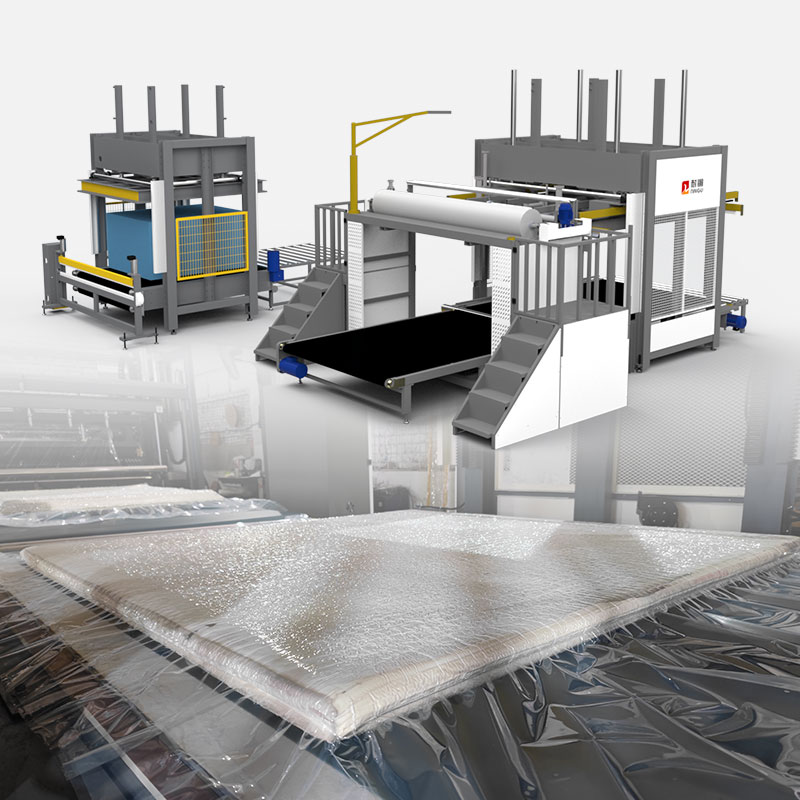
NAIGU provides foam compression and packing machinery for manufacturers looking to improve packing efficiency and export logistics.
Depending on the product and production requirements, suitable solutions can cover foam compression, roll packing, film packing, sealing, and related automation processes.
For manufacturers exporting mattresses, sofa cushions, foam products, and other flexible products, NAIGU can help evaluate product specifications and recommend an appropriate packing configuration.
Conclusion
The best foam compression packing solution for export depends on the foam material, product dimensions, compression requirements, production capacity, packing film, and shipping objectives.
For suitable foam products, compression and roll packing can reduce package volume, improve container utilization, optimize warehouse space, and streamline export logistics.
Before purchasing a machine, manufacturers should provide complete product specifications and shipping requirements. A properly matched compression machine and packing material can help create a more efficient and reliable export packing process.


